Showing posts with label violence. Show all posts

Friday, April 19, 2019

"Resisting the right: the woman who is a beacon of hope in Salvini's Italy"


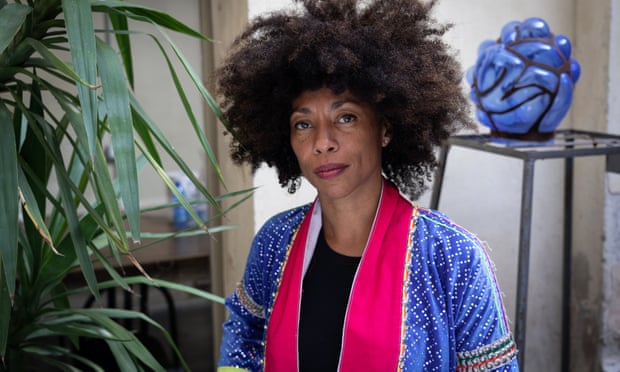
"Antonella Bundu is the lead candidate in a coalition of anti-fascist radical-left parties...


On a peaceful Monday morning in March 2018, a Senegalese street vendor named Idy Diene was murdered on the Vespucci bridge in Florence. 
The man who fired the six fatal shots was an Italian pensioner who told the police he had shot randomly at the first person he encountered. He had previously attempted to take his own life.
Antonella Bundu, 49, was one of the first people to arrive at the scene. She burst into tears when she was told that under the blood-stained sheet lay Diene. She had come to know him well, watching him set up and take down his makeshift table of cigarette lighters, tissues and umbrellas.
That afternoon she took part in the protests led by the Senegalese community in Florence. Diene had become the most recent victim of a series of attacks against Africans in Italy as anti-immigrant propaganda, spread in part by the far-right leader Matteo Salvini, continued to circulated in mass media.
Since that day, the number of racially motivated attacks against migrants has risen sharply in Italy, tripling between 2017 and 2018, and Salvini has become interior minister. One year after Diene’s death, spurred on by the climate of intolerance and racism that has spread throughout the country, Bundu has decided to run for mayor of Florence. The daughter of a Florentine mother and a Sierra Leonean father, she has become the first black female candidate for mayor of a large Italian city.
She is the lead candidate in a coalition of radical-left parties including Potere al Popolo (Power to the People) and Rifondazione Comunista (Communist Refoundation). The vote will be held at the same time as the European elections on 23-26 May.
“Until a few months ago I never imagined I could take on such a role,” Bundu told the Guardian. “Then a movement tied to the left invited me to speak at the Alfieri Theatre in Florence. I was given one word on which to improvise a seven-minute speech. The word was ‘black’. Without hesitation I poured out about what was happening in Italy. I spoke about myself, my story. They must have liked my monologue, because they immediately asked me if I’d be interested in running for mayor’s office.
Read more about her story at source here.

Saturday, January 12, 2019

"Belgian-Canadian student faces up to 8 years in prison after protest in Hungary"

"A Belgian-Canadian university student and DiEM25 member is facing up to eight years of jail-time after being arrested during a spontaneous protest in front of the Hungarian Parliament on the evening of December 12.

Adrien Beauduin, a PhD student in Gender Studies at Central European University, was arrested along with four other protesters, who are all being charged with collective assault on a public official. Police charges allege that all five who were arrested, including Beauduin, used their left arm to strike a police officer and then kicked in the direction of a police officer.
According to videos and photos from the event, as well as witnesses present, Beauduin did not attack any police officers. Available video footage of the demonstration shows him standing calmly before being swept up when police charged the crowd.
“I am being charged with a very serious crime that I did not commit,” says Beauduin. “I am afraid for my future and the future of my fellow protestors.”
If found guilty of the police charges Beauduin will face a prison sentence ranging from a minimum of two years to a maximum of eight years."
Read more from source (and donate to help) here.

Friday, February 2, 2018

"As the European migrant trail has gone underground, the threat of sexual violence has increased"


"When Simin reached Europe, she thought the hardest part of her journey was behind her. 

She left her native Iran, where she had lived all of her 44 years, because she feared being arrested for her work as a journalist. It took her three months to travel from Iran to Serbia, much of it by foot across mountains and borders.
But it was when she was crossing into Croatia that the worst happened. She was raped by two smugglers, themselves migrants, from Afghanistan.
“The smugglers forced me to be with them. He threatened to not let me get in the car if I refused being with him,” says Simin, who is living in a center for refugees on the outskirts of Zagreb, Croatia.
“I had to do it. I was a woman alone — all on my own.”

A common story

Simin’s story is one of many similar accounts from women who have traveled the European migrant trail since the crisis began in 2015.
Rights groups say women face assault, harassment and sexual violence at every step of the way along the trail, including on European soil.
And there are signs that the environment for attacks against women along the route has only worsened since the height of the crisis. European countries have closed their borders and pushed the trail underground, putting women at greater risk than ever before.  
Many sexual crimes go unreported due to the precarious legal status of the victims as they cross borders and try to avoid authorities. And even when women do report incidents they have little hope of justice, for the same reason.
Read more from source at PRI, here.

Saturday, January 13, 2018

Spain gang-rape case exposes problems in justice system

["I believe you." Photo:  
Vincent West/Reuters ]
 "On Nov. 14, a young woman entered the Navarre provincial court in northern Spain, a bottle of water in one hand, a piece of paper in the other. She sat on a chair placed at the center of the room before a tribunal and then, probed along by her attorney, recounted the events from two summers past that have dominated Spanish headlines since.
The young woman from Madrid, known only as la víctima, “the victim,” in local media, was 18 then when she alleges she was raped by five men in the early morning hours of July 7, 2016. She’d gone to Pamplona for the Running of the Bulls — the city’s celebrated and testosterone-fueled tradition of “bullfights, street dancing ... and much drinking of strong Spanish wine,” as immortalized by one American superfan.
According to her testimony, she’d lost sight of the friend she’d traveled with and ended up making her way toward the car, which they'd planned on spending the night in. When a group of five male friends from Seville, strangers to her until then, struck up a conversation and suggested accompanying her to the vehicle, she accepted. At some point while they twisted their way down the dark streets, they led her to a doorway, pulled her in and took turns raping her, she said. When they’d finished, they seized her phone and left. After some time, she got dressed, sought help and reported the rape. It was only later after she’d pressed charges, and a trial was underway, that she discovered the men had filmed the act on their phones and shared the videos in their WhatsApp group.
The meat and bones of the retelling over, Navarre district attorney Elena Sarasate suddenly veered into new territory. “You seem to be a pretty social and extroverted young person,” she stated before the tribunal. “Do you usually post on social media?”
“Yes,” the young woman replied. “But I’m not going to post pictures of myself crying. I’m trying to lead a normal life. I’m not going to post a picture of myself on social media crying so that everyone can ask, ‘What happened to that girl?’ No. I’m going to continue living normally, and what I normally do is post pictures of myself out partying.”
What would appear to be an unusual turn in the woman’s testimony — her social media habits — has become the crux of the case known as La Manada, or “The Wolf Pack,” after the five accused men’s WhatsApp group name. In a bid to prove the young woman was not raped but consented to having group sex, the men’s defense hinges on proving she did not suffer any trauma following the sex act, which they’ve chiefly done by presenting social media posts showing her out with friends, knocking back a few drinks, or sharing content of an ostensibly sexual nature.
To the prosecution and feminist collectives the country over, the defense’s tactic is an age-old trope with new technological trappings — an updated version of “She was asking for it because she wore a miniskirt.” For the defense, it’s a necessary method designed to reflect the plaintiff’s psychological makeup. The trial ended in late November, and a verdict is still pending. If found guilty, the accused could each face up to 25 years and nine months in prison. The decision will have far-reaching implications. How much can social media reflect a person’s psychology or establish a motive? And should that content be admitted in a court of law?"

Read more from source at PRI/Global Post here.

Sunday, October 4, 2015

"Refugees in a strange land" - My latest opinion column for Catalonia Today magazine

Now even the Daily Mail's editors have finally accepted that British Prime Minister David Cameron's "swarms" of refugees need to be helped. 

The next question has become one of where Europe's newest asylum seekers and victims of war will be settled.


Conservative governments (including Spain's) have agreed to take a 'fair share' of refugees but this language is vague - exactly as they want it to be. 

In fact, Spain is taking less than half the EU request. The truth is that ninety five percent of Syrian refugees are in just five main host countries: Turkey, Lebanon, Jordan, Iraq and Egypt, which Amnesty International says are "struggling to cope."


Even just this kind of discussion about numbers of people to a certain extent makes the crisis more remote from reality. Public debate on this issue has been marked by language that is not only intentionally vague. 

Much of it uses terms that suck out the humanity of the desperate lives of many people who are living through hours and days that most of us can barely imagine. 

Cold, clinical terms like 'dislocation' and 'displacement' are used along with the insulting tag of 'boat people' - popular in Australia for a long time.


A country like Australia was built from migrants and plenty of them were refugees. Israel was also built by migrants and Britain is still being built by people from across the globe. European countries (and just as importantly Asian countries) will have to embrace migrants as an important part of their future. 

Apart from the clear humanitarian reasons, it is actually in the interests of ageing populaces in these parts of the world to take in and welcome the kind of younger, fit men, women and children who have been able to survive long sea journeys, for example.


More importantly, I care about the lives that wait for Europe’s latest arrivals. It is heartening to see Germans welcoming some of them at train stations. That is a much better alternative than attacking refugees in the camps where they were put, as German neo-Nazi’s recently did. 

But while we are considering what is good for different societies across Europe it is vital to think about the refugees themselves. 

Many will not be able to speak the language of their new locations. Many will feel alienated by the surroundings, wishing they could still be at home, despite the individual and collective tragedies unfolding there. It’s probable that the violence in their homelands has meant they have lost loved ones: survivor guilt can be a result.

But to feel that you are accepted as an equal - even in a land where you may not really want to live - that may be a source of solace and consolation. 


After your world has been turned upside down it is the least that anyone deserves.

[A version of this article was first published in Catalonia Today magazine, October 2015.]


Friday, May 1, 2015

"Germanwings, depression and blame" - My latest opinion column for Catalonia Today magazine

The recent Germanwings airline tragedy has naturally been the focus for countless media stories. Many of us in Catalonia know people who were acquainted with victims and their families but there is another personal aspect to the crash that seems to provoke strong reactions in those who have no direct connection to it.


Because most of the developed world now travels by air at least a few times a year, we are aware, at least semi-consciously, that every time we step on board a flight we are putting our lives in the hands of a small number of people - most particularly the pilots. It’s understandable and even maybe logical that we look for something or someone to blame when a plane is the cause of 150 deaths. Our instincts for justice demand an explanation. Now it has become clear that the co-pilot Andreas Lubitz, made a conscious decision to commit suicide/mass-murder and used his plane as a weapon. We also know that Lubitz had suffered from a severe depressive episode while training to be a pilot in 2009 and was receiving regular medical treatment right up to the day that he plowed the plane into a French mountain. According to his former doctors this treatment was for physical problems, not psychological ones.


What we do not know though, and most probably could never know is exactly why he chose to end his own life in such a horrific way. Lubitz had reportedly told an ex-girlfriend “One day I will do something...and everyone will then know my name and remember me.” This gives an egotistical motive for his actions but does not adequately explain much else. One of the most important points that arises here, and one that a lot of media has distorted or missed altogether, is that depression does not create homicidal maniacs.


A depressed person is actually highly unlikely to take others with them to the grave and the vast majority of people with depression do not hurt anyone because suicide is the main extreme risk, not violence. In this same column in December last year I wrote that “Today too, there are increasing numbers of people who are not only acknowledging their own depression or mental illness but are speaking openly about it in public forums and in the media.” Unfortunately, Andreas Lubitz was not someone who believed that he could do anything like this and apparently went to great trouble to hide his interior struggles from his employers. If he had found the right help, he and his unwitting victims, almost all of them strangers to him, might well have lived.


The statistics show that most murder-suicides happen in domestic settings, and involve a male and his spouse. Murder-suicides involving pilots or in gun massacres are, in fact, a great deal rarer. Lubitz himself then does not fit a standard type or pattern but I would speculate that he was a man (75% of suicides are men) who was overwhelmed with the complications of a high-pressure job and was desperate and confused. In an extravagant gesture, he had just bought matching Audi’s for himself and his current girlfriend, who was pregnant.


There is a real danger that Lubitz’s violence unfairly creates a greater stigma for those who have psychiatric problems and that men in particular will be less likely to talk to mental health professionals or even family and friends. I have had a limited, short-term personal experience with depression and would hate to see a major tragedy like this one lead to a deeper code of silence about the difficulties of the human mind.

[This article was first published in Catalonia Today magazine, May 2015.]


Friday, July 4, 2014

"I don't think,...therefore I am" - My latest article for Catalonia Today magazine


"Jews are responsible for most of the world’s wars."

This is "probably a true statement" according to one in four people across the entire planet, a recent global survey has found.

It would be easy to dismiss these kinds of stereotyped opinions as the ill-informed ignorance of a small minority, except that nearby events of the last few months show that discrimination and prejudice of many kinds are seemingly much deeper and more widespread than we might like to think.

At a Brussels Jewish museum in May a lone gunman shot dead three people, including two Israeli citizens on holiday. Only hours later, two Jews were attacked and beaten in Paris as they left a suburban synagogue.

In fact, following from another public slaying of three Jewish children and a Rabbi in Paris in 2012, more than 1,400 Jews left France to live in Israel in the first three months of this year, now making it probable that 2014 will see the biggest exodus of French Jews to Israel since that country was established in 1948.

The results from France's municipal elections in May seem to prove that getting out of the "land of liberty, fraternity and equality" is a prudent decision for those minorities without that promised equality.

The far right National Front party there has just received it's best ever voter support in municipal elections and actually won the European Parliament elections with 25% of the vote.
Further East the situation is also disturbing.

In the Ukrainian city of Donetsk, Jews leaving their local synagogue were handed leaflets from the new pro-Russian military that ordered them to pay a fee and register their property. They were threatened that failure to comply would lead to their assets being confiscated or even deportation.

One resident of the city said that she had never experienced anti-Semitism until she saw the leaflet but it reminded her of when the Nazis occupied the area in 1941. In that part of the world and across wider Europe we know that there has been a long and terrible history of violent "pogroms" against Jewish people.

But it is not just religious bigotry that is increasingly finding it's way into the light.

If you have a dislike of homosexuality then you can be comforted by having entire national governments that share your intolerance. Apart from Russia's new anti-gay "propaganda" laws, in the continent south from here homosexuality has become a criminal offence in Burundi, South Sudan, Uganda and Nigeria.

Even Australia's Prime Minister Tony Abbott has come up with more than 200 million dollars in new funds in a bid to push his anti-gay attitudes into schools through so-called "emotional and spiritual support" chaplains.

Meanwhile, another survey has discovered that a staggering 43% of Americans would not vote for any presidential candidate who declared them self to be an atheist.

Just as surprising was that 40% would also not cast their vote in favour of a president of who happened to be a Muslim.

Equally, the possibility of a lesbian or gay president of the "free world" would almost certainly be blocked by the 30% of Americans who openly admitted that they would not support their commander in chief being of that sexual orientation.

But where do these attitudes come from?

I think that purely and simply they can be a result of collectively identifying ourselves as different from others. If we are X and they are Y, then oh, that is a relief because now I know who I am.

As George Orwell wrote, this is "the habit of assuming that human beings can be classified like insects," and something that I believe is done instinctively by extremists and others who don't have what is needed to create their own beliefs.

At it's core, this mindset of segregation and separation tips 17th century philosopher René Descartes celebrated phrase "I think, therefore I am" on it's head.


Sunday, March 17, 2013

Immigrant badly injured after assault at festival

Moulaye Ndiaye. Photo by Jesus Cisnes from lasprovincias.es.
"Moulaye Ndiaye, a street vendor and native from Senegal, was thrown from a bridge on the eve of the 2012 Tomatina Festival in Buñol, Valencia, Spain. 


Moulaye was selling his products at the festival when a young man stole his sunglasses. After asking, without success, for the man to return them, Moulaye decided to leave, and then he was shoved and pushed over a bridge more than six metres from the ground. The backpack which he was carrying and the reeds growing in the area where he fell [probably]saved his life. 

He spent a month in intensive care at the Manises Hospital with traumas, several broken ribs and a spinal injury. The assault has caused him to lose sight in his right eye and a very serious neck and back injury has prevented him from working since.


In its blog, and on its Facebook wall, the Movement Against Intolerance seeks the help of those who witnessed the assault, asking them to make contact with the organisation so that the case can remain open, as the police have been unable to find the aggressor who escaped into the night. There has also been a large civilian mobilisation  which still continues, and the residents of the town of Buñol say they are horrified at this tragic event."

More details here at Global Voices online.

Friday, February 4, 2011

Attacks on Catalan reporters in Egypt

Joan Roura, a correspondent for TV3, a Catalan public television station, was attacked [yesterday] by men who tried to steal his mobile phone while he was conducting a live broadcast for the 24 hours news channel.

Assaults were also reported against Sal Emergui, a correspondent for Catalan radio RAC1 [and] Gemma Saura
(amongst more than 30 other members of the international media.)

Source: here.

Saturday, October 10, 2009

Dealing with domestic violence in Spain

Domestic violence is a real problem in Spain (just as in many other parts of the world) and recently there was an interesting proposal from the Spanish government for dealing with it.

If we accept that attempts to educate offenders should still be a part of sentences (as much as punishment or deterrence) then this new plan deserves to be seriously considered.

As reported by J. GARCÍA in EL PAÍS last week, the Interior Ministry is studying an initiative that would replace community service sentences for those found guilty of committing gender violence crimes with a series of workshops intended to raise awareness about the problem.

In Spain there are currently 19,000 gender violence offenders who are fulfilling community service obligations.

The government argues that this type of sentence is unrelated to the crime, and that sensitivity training could be more effective.

“Perhaps we won’t get through to them all, but the idea is to educate the abusers and make them conscious of their situation and that of the victim. The goal, in the end, is to reduce the number of repeat offenders,” said Miguel Ángel Vicente, sub director for the government’s cutodial policies.

The proposed treatment would have the offender attend between 15 and 20 sessions with “different itineraries” depending on the seriousness of the offence.

I believe that this kind approach is likely to be better for many than simply incarcerating all offenders inside a brutal jail system or just punishing them with a fine.