(This poem was first published in Burrow here at Old Water Rat’s Publishing )
soft lines of fog trees
not the desert
but quiet like the desert

we look at the stars to see
what we come from

body not yet the enemy
light slowly befriends you
(This poem was first published in Burrow here at Old Water Rat’s Publishing )
soft lines of fog trees
not the desert
but quiet like the desert
we look at the stars to see
what we come from
body not yet the enemy
light slowly befriends you

[This article was first published in Catalonia Today magazine, Oct. 2022.]
The following is based on current and factual information…
How would you fancy sleeping in a car or a van?
Rather than the now antiquated 20th century idea of having your own bed in something as outdated as a house, for the price of two euros a day our new business in Barcelona will fulfill this fantasy for you. And for only 60 euros a month on a prime real-estate public street!
Naturally, there are those in the city council who want to curb your right to get your shut-eye shut out of buildings but they just don’t understand an adventurous spirit. Don’t let them tell you what to do and where you can and can’t do it. You work hard every day and you deserve what we call a “micro space” to match your macro dreams.
We are opening in a small, quiet and almost-deserted square in the Sant Andreu district. In the same location you can rub shoulders with customers of our beehive flats. On top of all that, for a mere 90 euros per month you can go inside, hang out on a plastic chair for the entire day, have a shower, store food, use the complimentary microwave, or even wash your clothes. Now that’s what we call livin’, baby!
Yes, it’s true that those small-minded lefty bureaucrats in the council have assured everybody that our operation won’t actually be legal but in the meantime you can make us your home. We’ve traded in the semi-legal shadows for years so we’re at home with that, even if you’re not!
OK, it’s not exactly what most people call home and it’s temporary but let’s not quibble about semantics. You need a mattress and we can rent you one. That’s just free-market capitalism in operation and who should stand in the way of your good night’s sleep. So, wind up the windows, click the locks on the doors and snuggle up for sweet dreams!
Oh, and another thing that you don’t need to concern yourself with. We admit that municipal tow trucks have already taken some of the sleeper vehicles away but this is just a minor inconvenience. In the unlikely event we are discriminated against again in this way, we’ll refund half of your fee and find you another vehicle to nod off in. You can’t say fairer than that, can you?
As for our premium accommodation we even have a waiting list for others to live in homes that are no bigger than three square metres. We acknowledge that at the moment those are also prohibited in Barcelona but they’ve got them in Japan and “anything-goes Madrid” so why not here too?
I know you’ve heard stories of paper thin walls and hearing other people’s alarms going off and being kept awake by neighbour’s snoring…but just relax. Humans can get used to anything. Eventually.
The truth is as simple. You just don’t have a right to human-sized accommodation anymore. Society can’t deliver this to everyone so some people need to learn that they aren’t lucky enough to be comfortable, secure or well-housed. A lie-down bed isn’t a right, it’s a privilege!

One of the reasons I wrote the book was this man, the great author, Antonio Muñoz Molina.
In Andalucia's Ubeda, his first hometown, I talked to one of his family then turned and headed to my own home in Catalonia.
The long way.
(Read more of my latest book here.)
.jpg)
(Photo: Allan Warren)
The book must always come before the author,” said Nobel Prize winner, VS Naipaul.
Unlike another genius such as James Baldwin, Napaul spent his entire brilliant, vicious life seemingly trying to prove himself wrong.
For Baldwin, words came first. By becoming a child preacher in his native New York City he avoided the Harlem ghetto.
He also soon found the power of images and a sense of himself as gay and American, an American “negro”: the mid 20th century polite English word for “black”.
(I remember the shock of hearing the other, offensive ‘N-word’ when my cousin in Sydney used it as the name for his pet dog. I was seven years old at the time but even then somehow I knew how wrong that was.)
On a wider tour of Iberia, Baldwin (who died in rural France in 1987) came to Barcelona six decades ago last May.
He met the poet Jaime Gil de Biedma and stayed in his basement in Carrer Muntaner – “blacker than my reputation,” he called it – and they spent seven frenzied days together with [current mayor of Hijar] Luis Marquesán.
Biedma wrote in his diary: “Life, since Monday, when I met Jimmy Baldwin, has been so hectic that today I find myself in a state of real moral and physical exhaustion, aggravated by the intellectual dullness that comes with an alcoholic regime such as the one I have been following.”
According to Marquesán’s biographer, Miguel Dalmau, they went to the picnic areas of Montjuïc, “where they saw the landscape of misery, the shantytowns in disarray on the mountainside.” Ultimately it all led to Baldwin’s new friend Biedma questioning himself about whether he was a coward.
Despite the stimulating week, it seems fair to say that the Catalan capital was a place of mixed fortunes for Baldwin.
As reported in this magazine in October 2019, the publisher, Lumen, “had asked Barcelona photographer Oriol Maspons to advise on publishing the book ‘Nothing Personal’ by James Baldwin and Richard Avedon, but his advice was ignored.
Hurt, he and other photographers published a signed ad in the magazine Destino, criticising the indifference shown towards a masterpiece dealing with the US’ racist and classist system.”
Fortunately though, one of Baldwin’s books, ‘Beale Street Blues’ has finally found its way into a Catalan translation, thanks to the publisher Edicions 1984 and the work of Oriol Ampuero.
He launched it along with professor and writer Josep-Anton Fernàndez on June 13 at the Sants bookshop La Inexplicable.
Baldwin’s work, like so many others, was censored in Spain during the Franco years, but Barcelona played another part in his local history when the US writer Nicholas Boggs was a recent writer-in-residence at Jiwar on Carrer Astúries (founded by two Barcelona residents, Mireia Estrada Gelabart and Moroccan-Canadian Ahmed Ghazali). Boggs spent his time co-editing and writing the introduction to a new edition of Baldwin’s ‘Little Man, Little Man: A Story of Childhood.’
He is also continuing work on his manuscript in progress about love and race in Baldwin’s life and work at the Department of English at New York University.
I share Boggs’ fixation. It knocked me sideways when I read Baldwin’s novel, ’Tell Me How Long the Train’s Been Gone’, during lockdown in spring 2020 and I’ve barely left his words untouched since then.
Reading James Baldwin (or listening to his captivating voice) is like having a fogged-up window wiped clean. Now the view can be seen for what it is, whether picturesque or hideous.
Baldwin’s penetrating work, too, is now starting to be seen more and more for what it is, both in Catalonia and across the wider planet.
[This article was first published in Catalonia Today magazine, Sept. 2022.]

Isidra says:
"This is an unusual travel book...
Being a Spaniard myself, I really enjoyed the mix of literary musings, historical facts and sightseeing that Hetherington offers...
As the title says, it's a slow kind of travel, one that allows for immersion and a nuance, very personal travelogue that mixes reflection, description and awe.
It made me eager to start traveling by train!"
[Read the full Goodreads reader review here.]

Enjoying the great views (and later a glass of cava sparkling wine) at Unlimited Barcelona in Plaça Urquinaona.
Highly recommended!
(Full disclosure: We were given a free visit and drink because of my journalism work.)
4 surprising tributes stamped into power-poles next to vines on the edge of town, Sant Cugat Sesgarrigues (where I live.)
" El Cid (1045 – July 10, 1099), whose birth name was Rodrigo Díaz de Vivar (or Bibar), is a Spanish national hero, a mercenary soldier who fought for the Spanish king Alfonso VII to liberate parts of Spain from the Almoravid dynasty and eventually captured the Muslim caliphate of Valencia and ruled his own kingdom.
...He [also] fought for the Huddid dynasty for almost ten years, scoring significant victories against both Muslim and Christian foes."


"On Monday, the world’s eyes were on a ship leaving the port of Odesa — carrying 26,000 tons of Ukrainian corn, it was the first such shipment since Russia’s invasion of Ukraine in late February.
For months, every magazine and newspaper carried the same headline: A global food-crisis is looming. Record-high food prices had thrust millions into food insecurity and communities into poverty. Soon after Russian troops crossed into Ukraine, the price of wheat surged 70% and western leaders sought to tie the price increases to the war. Russia, in turn, blamed the US and European sanctions imposed against it, and Ukraine and Europe blamed the “blockade” of Ukrainian ports.
But the crisis of hunger predates the conflict. “Nearly one in three people in the world (2.37 billion) did not have access to adequate food in 2020” according to a 2021 report by the UN’s Food and Agriculture Organisation (FAO). But, production and supply, especially of commodities like wheat, had not changed much at all. Well before the grains left the port of Odesa, the soaring wheat prices from February this year had already fallen — in mid-July, they fell to pre-war levels.
We produce more than enough food to feed the world’s entire population. Yet, our people are hungry. The spike in food prices this year, and indeed the years before it, was never about interrupted supply, not exclusively anyway — but about speculation and profiteering in the markets — a fact that has been ignored in all major reports about the food crisis from the World Bank, FAO, and other international institutions.
New data by Lighthouse Reports, a European nonprofit, shows that speculation in commodities markets is the dominant driver of the spike in prices, with speculators responsible for 72% of all buying activity on the Paris wheat market in April.
They create hunger because they can. Each year, tens of millions of subsistence farmers are forced from their land by multinational agribusinesses. This process — in its scale, almost unparalleled in human history — destroys sustainable agricultural production and forces people into slums, where access to food is dependent on prices and incomes. Poverty, not underproduction, causes famine.
They profit from our hunger because they can. The rising food crisis created “62 new food billionaires” in just 24 months since the beginning of the pandemic. These corporate empires do not trade in food — they trade in starvation.
For decades, popular forces like La Via Campesina have been fighting to build a fairer global food system. It can be done: The Indian farmers’ strike of 2020-21, which successfully overturned three neoliberal agricultural laws, gives us confidence about the power of people to resist the global regime of hunger. But to win, popular forces will need to go further — winning state power and wielding it to reclaim food from the jaws of those who profit from our hunger."
From Progressive International

[This article was first published under the title "Summer at its widest" in Catalonia Today, July 2022.]
15 summers ago (my first full one here) the CCCB, or Centre de Cultura Contemporània de Barcelona showed French-Jewish filmaker Claude Lanzmann’s “extraordinary diptych of the Holocaust.”
Coming after the critically acclaimed, monumental 9 and a half hour documentary, Holocaust [or “Shoah”] of 1985, the Barcelona screening was titled “Variations of what is real.” It was part of their Xcèntric program for 2006-7.
Led by the academic Jorge Seca, the films were subtitled in Castilian Spanish by a group of translators from the UAB, Autonomous University in Barcelona.
In the first offering, Un vivant qui passe (1997), Lanzmann tells the story of Maurice Rossel, the only representative of the Red Cross to visit the Terezin death camp and wrote a report stating that he had seen “no atrocities.”
In 1944 Rossel reported that it was in fact a “model ghetto” and noticed “nothing terribly wrong”. He also freely and repeatedly expressed his view that Jews had “a passivity that I couldn’t stomach.”
In the longer follow-up reel, “Sobibor” (2001) Lanzmann examined another episode of the Holocaust: the attempted escape of 600 Jews (also including some Red Army prisoners of war) from a Polish extermination camp.
He did this “through the story of Yehuda Lerner [one of only 60 survivors] who was seventeen years old, when in a meticulous plan of rebellion he ordered a Nazi officer to smash his head with an axe.”
The film “ends with the triumph of the Jews’ murder of their Nazi guards and their succesful flight from Sobibor, but he does not follow the survivors [return] where some were killed.”
Lanzmann himself (who died 4 years ago this July) was often simply called a director.
In truth, he was a film producer in the widest sense of the word.
According to journalist Julia Pascal he was even “the movie-maker-as-spy, the Jew who pretended to be pro-Nazi in order to film the guilty.
In one long sequence, he posed as a Nazi sympathiser and secretly filmed an SS officer who confided his past.” In fact, after their subterfuge was discovered he and a female accomplice were badly beaten and it could have been much worse before they got away.
Lanzmann created from his will, as a stranger to brevity, stapling it well below accuracy or exhaustive detail.
The memoir he wrote, titled The Patagonian Hare, was no exception. If you’re like me and an hour on the beach (or maximum two) is only doable with a good book and you want something different from the standard lighter or narrower reading, then this book is the polar opposite.
It’s a kind of stretched agony in many places. His battle with what becomes his life’s purpose, the telling of the most stomach-churning truths, is clear.
What shines too from the lines of his memory in top gear is his determination to never be resigned to a great silence, to never taste the poison of passivity.
His is a reverence for life itself. Seemingly never belittled by doubt, he has made much of the crucial importance of Nazi victims being treated so that in contemporay times “they haven’t died alone.”
My hope for everyone reading this in a season of pure heat is that you find time to relax and enjoy all that you can, living with the spirit of a Lanzmann.

Europe’s elected representatives have let citizens down, says Transport & Environment, which has labelled the vote a disaster for the climate and a gift to Putin.
Luca Bonaccorsi, sustainable finance director at T&E, said:“This must be the biggest act of greenwashing in history; enacted by the same people that are supposed to protect us from the climate crisis. The sun won’t set in the east just because a bunch of complicit politicians say so in a law. Nor will gas ever be clean and renewable. The laws of nature don’t lie, but the taxonomy does. This bill will not stand up to the many legal challenges being announced, and it will be shunned by investors.”
The provisions allow all new gas plants to be labelled green under the condition that they will be used ‘sparingly’. This undermines the credibility of sustainable investing, says T&E, since no green fund or green bond includes gas today. At best the EU’s rules will be ignored, at worst it will fuel a whole industry of fake green investments.
Luca Bonaccorsi, concluded: “On top of being environmentally disastrous the bill is also unfair, with almost 75% of the estimated green funds going to France and Germany. The criteria to access green funds have been skillfully designed to steer all funds towards the two member states that co-authored the law. This is a truly sad day for Europe.”


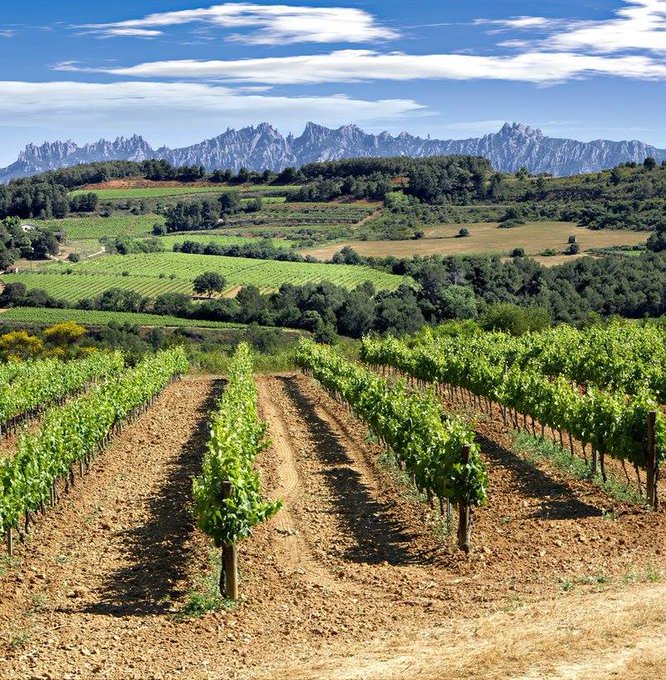
Most likely, you’re reading this with summer’s heat well underway but I actively resent the idea that most foreigners have moved to Mediterranean countries solely for solar delight.
Not true.
Speaking only for myself, there’s plenty of other reasons to live here long-term and I’ve written in detail about them in this column over the years.
But yes, I admit, I don’t remember a spring here in the last decade and a half that was so bloody gloomy.
Apparently, March had the least number of sunlight hours in 50 years and April/early May didn’t feel much better.
I want my money back. I didn’t sign up for these relentless, grim overhead conditions and general damp.
Simon Winder in his book Germania, makes an argument (with Germany as the exception) that “one very odd aspect of European countries is that if you start in their north-wests they are generally unattractive, harsh places but if you head south-east life gets better.”
He goes on to put this down to fairly obvious factors like the existence of more sun, olives, melons and an outdoor life including wine and vineyards.
Then the author uncorks some wider history, quoting a British wine-merchant who maintains that for most people in England until the First World War, “wine meant drinking ‘hock’ (German Rhine/Mosel white) or [what was popularly called] ‘claret’ (French Bordeaux red).
Following this, post-war, the German drop “tasted too much of steel-helmet” and apart from the sweeter “Blue Nun” it largely disappeared from many British tables.
It seems to me that a lot of 21st-century Europeans, including Catalans and Spanish of course, take good wine slightly for granted.
In some areas, the geography supports that. Just travel [I almost remember what that verb means] down the roads or look out the train window between Martorell and down the line through the Penedès to near the coast at Sant Vicenç de Calders.
The landscape is a non-religious hymn to the grape.
That great truth-teller Eduardo Galeano wrote, “We are all mortal until the first kiss and the second glass of wine.”
Personally, I can’t remember ever having anything better than an ice-cold Chilean dry white called Concha y Toro in a Canberra restaurant called El Rincon Latino.
With the recent scarcity of a penetrating heat and further east a war that must’ve taken any warmth out of any scattering of sun, I hope that rays of natural serotonin are soon seeping into our souls like “that first swallow of wine… after you’ve just crossed the desert.”
Now I’m reminded of the basic and essential difference between climate and weather, though I doubt Leonard Cohen was thinking about that when he wrote, “Springtime starts and then it stops in the name of something new.”
What else is new apart from the season? Anything? Something?
[This article was first published in Catalonia Today magazine, June 2022.]

Motorcycles, construction sites, shouting, music, mobile phones, bells, firecrackers, barking, horns, alarms, barrel organs, shouting, radios, hammers, garbage trucks, heels, drills, TVs and slot machines…
We live in the acceptance that silence is no longer possible; we have given up, we endorse with total naturalness that we do not have access to the balm of tranquillity...’
Read more (in Spanish) here.
[Article first found at Business over Tapas:

Exudes authenticity and realism.
Hetherington gives us vivid pictures of the innards of Spain.
A book meant more for explorers than for tourists.
I’d recommend it to anyone who wants to know about the real Spain."
Thanks very much, Andrew! [Review here.]


