Showing posts with label El Pais. Show all posts

Saturday, January 25, 2020

"The pioneering Spanish company where staff work a 4-day week"

"A 4-day week on the same salary has become a reality in Spain at Software Delsol in the southern Spanish city of Jaén...

When it was implemented at Microsoft in Japan, sales increased by 40%.

The company believes that a shorter week leads to less absenteeism and greater staff loyalty while attracting an unparalleled pool of talent...

Established 26 years ago and located in the Geolit Science and Technology Park, the company’s headquarters are designed with both leisure and productivity in mind; more formal customer service zones combine with areas for informal meetings and sofas to relax on, not to mention the gym, paddle tennis court and outdoor pool.

Staff also enjoy free lunches and the company offers scholarships, health insurance and the possibility of working from home as one employee does from Bordeaux, all of which improves the work-life balance."

In addition, the company guarantees a salary hike of over 3% each year –3.2% this year – another unprecedented working condition in Spain’s labor landscape."

Read more from source here

Tuesday, January 2, 2018

"Don't be fooled, the crisis is still there: the Euro is in danger"

[Photo: Barcelona, 9 Nov. 2017, 

Today in El País - Yanis Varoufakis, co-founder of DiEM25...

"The current situation reminds me of 2001: we came from twenty years of stringing bubbles, the dotcom broke out, and even so we managed to stay the same and provoked an even more serious crisis with an even larger bubble that burst in 2008. 

We run the risk of going back to the old ways. In Spain, total debt is rising. In Italy there is capital flight, a banking crisis in the making, an explosive political situation. 

What we have in Greece cannot be called recovery, and the debt is unpayable. 

The examples are inexhaustible. 

Throughout the periphery we exchanged full-time jobs for precarious jobs, thereby endangering future pensions and the foundations of the European economy. 

The financial and macroeconomic imbalances not only have not been reduced, but are even greater: I am afraid that we are not in a position to celebrate...The euro, as it is today, is unsustainable." 


Full interview in Castilian Spanish here: http://bit.ly/2CbhiST

Sunday, July 19, 2015

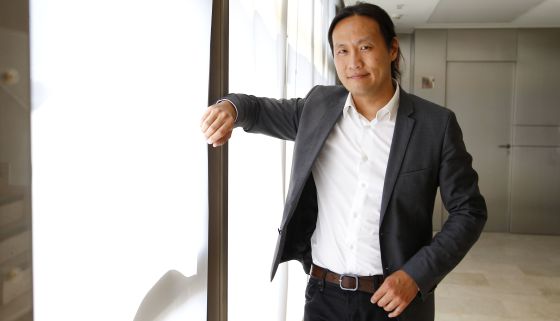
"How Spain’s Chinese immigrants went from dishwashers to doctors"

[Dídac Lee in Madrid on June 25. / LUIS SEVILLANO, El Pais.]
Fascinating stories of modern Chinese-Catalans and Chinese-Spaniards: proof that Iberia is slowly becoming more multi-cultural, and maybe at a faster rate than people here think.

Saturday, March 23, 2013

Those "big industries"


[Photo by Javier at sic.]


As one of Spain's greatest living writers, Antonio Muñoz Molina is someone always worth reading and this short piece of his in the English language version of El Pais is no exception.

He expresses some opinions about Spain that I have long thought true about my country of birth, Australia. Muñoz Molina lives part of the time in New York and has that particular kind of clear sight about Spain that only living away from your native land can bring.

I'm not sure I fully agree with him about all that he says though. Compared to somewhere like Australia I think there is a richness of culture that is acknowledged by many locals and to say you are a writer or journalist provokes more interest from the average person here than in Australia, at least in my experience.

But then again, MM should know. I suspect that his opinions are largely based on contact with business people and middle-level public officials, who (all across this planet) generally put making money ahead of anything else as piddly as the creative “industries.”

Somebody who has never written a book or put-together a well-researched article would probably have no idea what it takes to do so, just as I have no clue (or real interest) in deal-making and political schmoozing.


Saturday, December 22, 2012

"My name change saved my life." - The last British soldier to fight Franco dies at age 94


On his 18th birthday David Lomon (real name David Solomon) left the UK to join the Republicans in the fight against Franco.
 
"They advised me to change my last name to one less Jewish because to go fight the fascists, if I had the misfortune to be caught, it could help me to survive," he wrote in a memoir only a month ago.

After the Battle of the Ebro, Solomon was captured by Italian troops and sent to a POW camp in Palencia, mostly populated by the international brigade [of which George Orwell was also a member.]

 "The Gestapo came every few weeks to take German citizens and especially Jews away. My name change saved my life. " 

As a result of his altered name Solomon was put on a list of prisoners for exchange and release. He then went on to have a very long life, dying only last week.

Solomon was one of the few international brigades still alive, and the last of the British. In total, there were 35,000 “brigadistas internacionales” who came from 55 countries and  from a wide range of jobs including miners, lawyers and even leftist politicians such [German] Willy Brandt.

When Solomon first left home he believed that Spain would win the war.

 "We were good," he recalled with a smile. But once here he discovered that it was in fact the weaker side he had chosen. 

"We had to make do with old weapons, mostly from before the [first world] war and with old Russian machine guns. The food was not much better: donkey-meat, sardines and beans were our staple diet. But we were so determined to overcome all the difficulties that we just accepted what they gave us and we carried on. After all, we had not come to Spain to eat, but to fight. " 

Solomon was impressed by the Spanish: "I was fascinated to see people so poor and yet so proud," he said.

He fought in the Battle of Teruel and the Aragon offensive against Franco. A bomb just about killed him and the explosion left him unconscious for no telling how long. When he woke up, he realised he was a prisoner in a truck guarded by the Italian division of Blue Arrows. It was March 1938.

He and others were taken to the former monastery of San Pedro de Cardena. Crammed in the basement, many of his comrades died from a lack of medical care and food.

"It was awful. When you get into a place like that it’s as if you have left the world, "he recollected.

Solomon was proud of the Spanish passport he obtained due to to the ‘law of historical memory’ which granted citizenship to those from the International Brigades. Losing the Civil War was "a blow" for him but he claimed that it also served as an "inspiration" because when he returned to England, after being swapped for four prisoners Italians, he joined the Army and fought against Hitler after.

 "We won that war" he stated.

A month ago he came to Madrid (for the final time as he was) invited by the Friends of the International Brigades to participate in events for the 76th anniversary of the defense of the capital city.  

Almudena Cros, from that association, recalled how he walked "with admirable verve" along the same streets that he had marched in…76 years ago when he first joined the XI International Brigade.


Friday, July 1, 2011

Barcelona professor supports warnings on seafoods

Joan Llobet, a pharmacy professor at Barcelona University, is backing the call by the Spanish Agency for Food Safety and Nutrition (AESAN) on its stricter recommendations about the consumption of certain seafood.

In an El Pais article, he described the recommendations as "reasonable" even if they create "social alarm" and are "economically dangerous."

Read more here.

Wednesday, July 7, 2010

Is "the Spanish mind" contradictory?

A survey of Spanish social attitudes shows a mixture of liberal and conservative outlooks…

More than 60% of Spaniards between 15 and 64 years of age are in partial or complete favour of euthanasia, but only 21% view suicide as permissible, a study titled Social values and drugs presented in Madrid yesterday, shows.

Of 1,200 people surveyed for the report, carried out by anti-drug organizations alongside Caja Madrid’s social foundation, 54% agreed that there should be total freedom to abort a pregnancy, but only 44% said that same-sex relationships should be permitted.

Just 46% of those polled said they were against the death penalty for serious crimes, a significant increase since 2001.


[Raquel Seco in El Pais.]

Thursday, June 24, 2010

What Franco did for the Holocaust

The reality wasn’t just that the dictator’s propaganda was entirely untrue. He had in fact been very tempted to play his part in resolving the “Jewish problem in Europe.”

At the end of World War II, Franco largely succeeded in convincing the world that he had contributed to saving thousands of Jews from extermination at the hands of the Nazis.

Thanks to the patient work of a Jewish journalist, Jacobo Israel Garzón, the only document addressing the issue that still survives has surfaced in the National Archive’s collection. It was originally issued by the regional government of Zaragoza. It has since been published in the history magazine Raíces. This is the story behind it
[in Spanish from El Pais.]

Friday, June 4, 2010

A Spanish mother speaks about her son surviving Israel's deadly boat raid

I am David Segarra’s mother. It is 5am, June 2, and I wake up in Valencia learning that all the kidnapped victims in Israel have been freed, including my son.

I don’t harbor any hard feelings toward Israel at this time. And it isn’t because of some noble or religious cause but purely egotistical reasons.

Hate destroys, and Israel is showing a good example of this. I don’t want to detail the personal hell that I have gone through these past few days. It would be ridiculous to compare it to what Palestinian mothers go through each day. I am fortunate because my son David has survived the massacre aboard the Mavi Marmara and will be coming home safe and sound.

The Israeli soldiers may have destroyed his only lethal weapon: a video camera. But they forget that human beings have eyes, ears and mouths to tell the world of the horrors they have witnessed.
— Cristina Soler Crespo. Valencia. [From a letter to El Pais.]

Friday, May 21, 2010

More burqa talk in Catalonia and France

Officials in the Catalan town of Lleida will open a debate at the end of the month over whether to prohibit the use of the burqa in public spaces, reports LLUÍS VISA in El Pais.

The draft of a proposed ordinance was presented by the Catalan (CiU) nationalist party’s bloc in the city hall.

The burqa, which is used by some Muslim women and covers their entire bodies except for their eyes, is not prohibited anywhere in Spain.

French President Nicolas Sarkozy has proposed banning the use of the burqa in France, and a similar proposal is being studied by lawmakers in Belgium.

This GlobalPost article describes the views of Muslims heard at a public meeting in France, arranged by the woman’s rights group, Ni Putes, Ni Soumises (Neither Whores, Nor Submissives) whose members wholly support the ban.

My opinion on religous clothing can be found at this previous blog.

Monday, March 29, 2010

Seeing past the left and the right

If a writer gets unjustly sent to a forced-labour camp or a government persecutes homosexuals anyone with a voice, a pen (or nowadays a computer) should condemn it.

And these crimes against basic human rights should be condemned publicly whether they were done by leftist governments or right-wing governments.

This seems to me to be the reasoning put by Spanish writer Antonio Muñoz Molina and I find it difficult to argue with.

Also quoted in a different editorial the usually left-leaning El Pais newspaper he sets out a number of relevant examples of Western European intellectuals failing in their moral duty, maintaining that:

“A regime, a guerilla movement, need only proclaim that it is on the left — then it is treated with every kind of indulgence by French and Spanish columnists who don’t have to live with it; or with the romantic sympathy of well-intentioned, earnest people in England and Scandinavia, who are capable of shedding tears over a starving stray cat, but can be hard as flint at the sight of human blood on the TV screen.”

If we don’t insist on complete intellectual honesty and we make excuses for someone because of their supposed political positioning we are allowing the kind of cowardly doublethink that George Orwell described so well in Animal Farm.

Saturday, September 26, 2009

Spain sees a rise in anti-Semitism

Anti-Semitism is on the rise in Spain, with increasing cases of public racism and greater acceptance of violent anti-Jewish attitudes according to a new report.

Polluting the Public Square: Anti Semitic Discourse in Spain highlights examples of purportedly anti-Semitic political cartoons in the mainstream media, anti-Israeli demonstrations, and vandalism of Jewish community centres.

The Spanish newspapers El Pais (who, quite fairly gave coverage to the report)and El Mundo came in for particular attention.

What the report justifiably suggests to me is that too many journalists and cartoonists think that Judaism is the same thing as the state of Israel, or even the Israeli government.

There are plenty of Jews inside and outside Israel who do not support the Israeli government and strongly disagree with the excess force and other discriminatory policies it has undoubtedly imposed on Palestinians. (I would argue that self-defence against terrorists across its border makes moral sense though.)

Foreign Minister Miguel Ángel Moratinos, has stated that the Spanish government would investigate these allegations and report to the New York-based publishers of the report at a later date.

Saturday, August 29, 2009

I couldn't put it any better myself...

"You can [easily] find middle-class people who think that the unemployed should not be helped because they are lazy and don’t want to work.

Strangely, these same people do not think that helping banks perpetuates the economic cancer made up of using taxpayers’ money to finance private banking."

Emilio Iglesias Delgado from Seville, in a Letter to the Editor, El Pais 29/08/09.