Japanese pictorial map of Europe from the year 1932.

Japanese pictorial map of Europe from the year 1932.

In the early 1900s, in Europe, the era of colonial expansion was in full swing and tribal art still interested only avant-gardists such as Henri Matisse or André Derain, founders of Fauvism. Before being caught up in African know-how, Picasso first set out to discover Catalan primitive art.
He made "a journey to the depths of Catalonia, where he discovered a medieval Iberian creation that strongly affected his technique," says Juliette Pozzo, in charge of Pablo Picasso's personal collection at the Musée national Picasso-Paris...
Negro art? Don't know! ", quipped Pablo Picasso to an art critic in 1920, in his own tone without laughter. The Iberian artist, born in 1881 in Malaga, Spain, nevertheless collected African, Oceanic, Hispanic and more broadly, extra-Western art objects. This is in any case what testifies the finds in his private collection and the images of his workshops, full of statuettes, tools, ornaments, masks, totems ...
Picasso was an experimental painter, both one of the most acclaimed and the most criticized of modern art, "for his ultra misogynistic side and very violent towards women," says Olivia Marsaud, head of visual arts at the French Institute of Senegal.
A little prodigy of drawing from the age of 14 who "could have been one of the greatest classical artists of the twentieth century," says Gilles Plazy, one of his biographers."
Read more from source here.
 |
| [Greenwich Park parched by the heat and lack of rain on 12 August 2022. Photo by Alisdare Hickson. Source: Wikimedia Commons.] |
"Water privatization has catastrophic results, as shown by France and the United Kingdom. Citizens across Europe are increasingly opposed to the liberalization of essential services. But with climate change worsening droughts and heatwaves, public ownership is only the first step towards just and effective water management.
European policy has traditionally treated water as an abundant commodity to be extracted for profit. The severe droughts recently experienced in Europe indicate that this era of abundance is over and have brought home the true value of water as a precious and scarce resource. It is time to look at water in a new light.
This new situation requires a radical change in our approach to water policy and management. Former attempts to integrate water resources into the European single market now appear short-sighted at best and potentially disastrous. In order to build the resilience necessary to overcome the climate-related challenges ahead, we can no longer allow water to be exploited by market forces for private gain. The neoliberal water policies in place in many European countries need to be reversed, and water must be subject to public or commons-based governance. Only in this way can we build resilient water systems and keep water universally available and affordable.
The current era of water privatization first began to emerge in the 1980s when, under the conservative rule of Margaret Thatcher, the UK government oversaw the transformation of water facilities into private assets. Water was privatized in England and Wales in 1989 as part of a wider liberalization agenda for public services and resources. Ten regional water authorities and their proprietary infrastructure were completely transferred to privately owned companies. As a result, water companies became ‘permanent regulated monopolies’, facing ‘public sector levels of competition and risk’ with ‘private sector levels of profit and return’.1
The result was a complete collapse in investment in water infrastructure with serious consequences for water losses. Private company Thames Water, which provides water to the London metropolitan area, has been criticized for its inability to deal with huge leaks from its pipes. The estimated water loss is 600 million litres per day – almost a quarter of all the water it supplies. This quickly becomes a severe problem in the context of drought-induced water scarcity. Thames Water and Southern Water, another large water and wastewater company, have also been criticized for unacceptable levels of sewage pollution and spills, which seriously affect both valuable ecosystems and public health."
Read more (especially about Italy and remunicipalisation of water in France) from source at Eurozine here.

"Why doesn’t the 1978 Constitution of Spain include the word “landscape”?
Why doesn’t a Coastline Conservatory such as the French one exist in Spain?
Why were more than 1,000 beautiful villages catalogued in 1967 in Spain, and now there are barely 100 are left?
Why have democracy and the system of Autonomous Regions been seriously harmful to the landscape, and as a consequence, ruined in an irreparable manner the collective imagination?
España fea is a brillant study of the atrocities committed against the Spanish heritage from the end of the Franco dictatorship to today.
With rigour and sensitivity it gives a detailed overview of all the absurdities undertaken on the Mediterranean coasts [from] the North, passing through “emptied Spain” and Madrid’s urban-planning disaster, and it analyses the causes that led to this cultural catastrophe.
It reveals the strategy invented by ignorant and corrupt politicians and developers, with the complicit silence of a demobilized guild, that of architects, plus the indifference and ignorance of the intellectuals and the media.
Nevertheless, the book also analyzes in detail some examples of a work well done, connecting with the best European tradition, in cities such as Barcelona or Santiago de Compostela, or in villages such as Albarracín or Vejer de la Frontera.
Starting from numerous interviews and uniting the journalistic chronicle, travel book and political essay, Andrés Rubio presents a truly original text full of nuances. Analyzing also the cases of France, Germany and Italy, it carries a Europeanist and progressive message in defense of the best qualities of the public, advocating for land-use planning as an essential weapon to affirm democracy."

Europe’s elected representatives have let citizens down, says Transport & Environment, which has labelled the vote a disaster for the climate and a gift to Putin.
Luca Bonaccorsi, sustainable finance director at T&E, said:“This must be the biggest act of greenwashing in history; enacted by the same people that are supposed to protect us from the climate crisis. The sun won’t set in the east just because a bunch of complicit politicians say so in a law. Nor will gas ever be clean and renewable. The laws of nature don’t lie, but the taxonomy does. This bill will not stand up to the many legal challenges being announced, and it will be shunned by investors.”
The provisions allow all new gas plants to be labelled green under the condition that they will be used ‘sparingly’. This undermines the credibility of sustainable investing, says T&E, since no green fund or green bond includes gas today. At best the EU’s rules will be ignored, at worst it will fuel a whole industry of fake green investments.
Luca Bonaccorsi, concluded: “On top of being environmentally disastrous the bill is also unfair, with almost 75% of the estimated green funds going to France and Germany. The criteria to access green funds have been skillfully designed to steer all funds towards the two member states that co-authored the law. This is a truly sad day for Europe.”
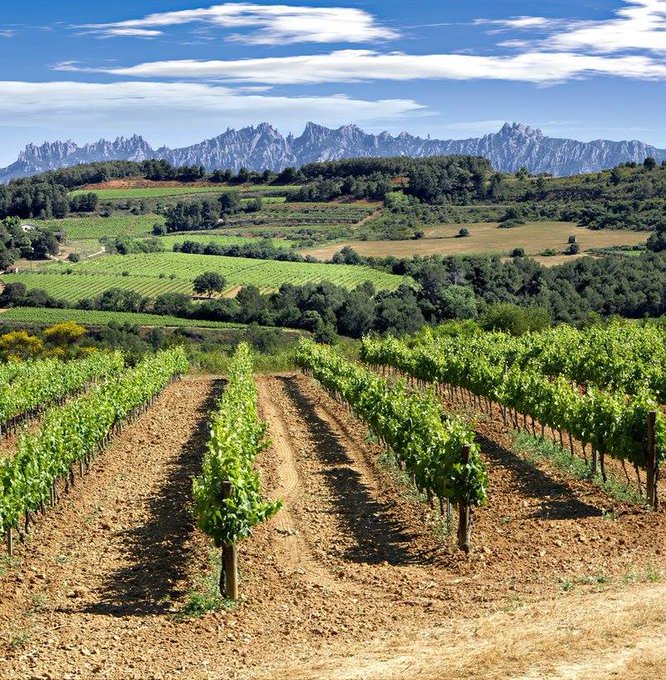
Most likely, you’re reading this with summer’s heat well underway but I actively resent the idea that most foreigners have moved to Mediterranean countries solely for solar delight.
Not true.
Speaking only for myself, there’s plenty of other reasons to live here long-term and I’ve written in detail about them in this column over the years.
But yes, I admit, I don’t remember a spring here in the last decade and a half that was so bloody gloomy.
Apparently, March had the least number of sunlight hours in 50 years and April/early May didn’t feel much better.
I want my money back. I didn’t sign up for these relentless, grim overhead conditions and general damp.
Simon Winder in his book Germania, makes an argument (with Germany as the exception) that “one very odd aspect of European countries is that if you start in their north-wests they are generally unattractive, harsh places but if you head south-east life gets better.”
He goes on to put this down to fairly obvious factors like the existence of more sun, olives, melons and an outdoor life including wine and vineyards.
Then the author uncorks some wider history, quoting a British wine-merchant who maintains that for most people in England until the First World War, “wine meant drinking ‘hock’ (German Rhine/Mosel white) or [what was popularly called] ‘claret’ (French Bordeaux red).
Following this, post-war, the German drop “tasted too much of steel-helmet” and apart from the sweeter “Blue Nun” it largely disappeared from many British tables.
It seems to me that a lot of 21st-century Europeans, including Catalans and Spanish of course, take good wine slightly for granted.
In some areas, the geography supports that. Just travel [I almost remember what that verb means] down the roads or look out the train window between Martorell and down the line through the Penedès to near the coast at Sant Vicenç de Calders.
The landscape is a non-religious hymn to the grape.
That great truth-teller Eduardo Galeano wrote, “We are all mortal until the first kiss and the second glass of wine.”
Personally, I can’t remember ever having anything better than an ice-cold Chilean dry white called Concha y Toro in a Canberra restaurant called El Rincon Latino.
With the recent scarcity of a penetrating heat and further east a war that must’ve taken any warmth out of any scattering of sun, I hope that rays of natural serotonin are soon seeping into our souls like “that first swallow of wine… after you’ve just crossed the desert.”
Now I’m reminded of the basic and essential difference between climate and weather, though I doubt Leonard Cohen was thinking about that when he wrote, “Springtime starts and then it stops in the name of something new.”
What else is new apart from the season? Anything? Something?
[This article was first published in Catalonia Today magazine, June 2022.]
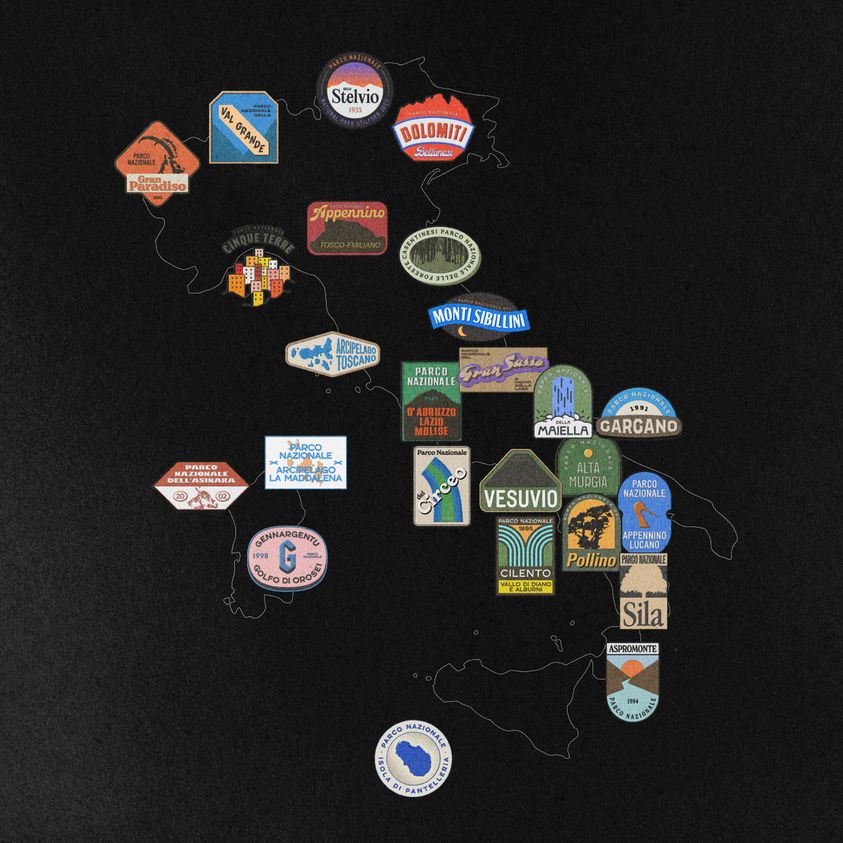
I just love how all their symbols (still) look like they were designed and made before about 1984. Never been updated: there's something innocent in that.

Brilliant, concise current affairs summaries: done every week. I couldn't do without it.
Read for free only this week here.
This is an alarming, even disturbing video.
"The speed and magnitude of the climate change we are facing today is unprecedented. Heatwaves, droughts, floods... We are feeling its effects on our daily lives, year after year. Its impacts will increase at least until 2050 and every region of Europe will be affected.
Based on the results of the latest available studies, and in particular, on the 6th IPCC report, this film, produced by scientists in the framework of the European project EUCP, aims to present to the general public the climate changes expected in Europe in 2050. The researchers explain in an accessible way the variations in temperature and precipitation as well as the extreme climate events that European inhabitants will have to face. This film provides the keys to understand how climate will reshape our landscapes and lifestyles over the coming decades. ... and to enable us to better anticipate the need for human societies to adapt to this partly inevitable climate change."

Instead, over a period of years, Steve Cracknell spoke directly to the horses’ mouths and with great empathy and balance, he lets us learn about the various sides of the issues.
His central question in a new release titled The Implausible Rewilding of the Pyrenees is whether native animals should be reintroduced to these mountains, along with selected non-native animals.
According to Cracknell, rewilding comes from the idea that traditional conservation has failed to slow or even stop a decline in biodiversity in Catalonia, parts of Aragon and the border country across Spain and France.
This is a trend that could be reversed by reintroducing key species ‘and creating suitable habitats for them. “What is most important,” he says, “is not the presence of the animal but the effect it has on its environment” and here the most controversial predators are the bear and the wolf.
With the fitness of a young goat, the author climbs up to isolated summer pastures, freezing his extremities in the quest to see a bear for the first time. He also spends hours and days with farmers doing the seasonal ‘transhumance’ where cattle or sheep are herded overland to new feeding grounds.
He interviews shepherds, ecologists and wild boar hunters, among others. In the process, he’s not afraid to get dirt under his fingernails and also (I suspect) end up reeking of sheep dung. The sadness and gore of sheep who’ve been attacked by bears is also something he doesn’t avoid.
He asks all the best questions to gently test the claims and experiences related by those who have a lot to lose and those who take an interest for non-economic reasons. I was happy to see he never made the appalling choice of calling anyone “stakeholders in the debate”.
The details in the book are often exact and surprising. For example, bears are known by the name across the region. One of them named “Goiat” (meaning boy or lad) is a 10-year-old, 205 kg male (born in Slovenia) and the only bear to have been released in the southern part of Catalonia in Pallars Sobirà in 2016.
A remarkable camera trap photo shows another (possibly scratching his belly) against a tree in Vall d’Aran. (The author mentions that wolves from Italian stock arrived in Catalonia in 2006 after a century’s absence.)
One shepherd who Cracknell spends time with is Mustapha, originally from a sheep farm in the Atlas Mountains of Morocco. With his legal status now fully regularised (and with wife and young child who joined him later) he had previously crossed over the sea to the Canary Islands from Western Sahara. Thanks to funding grants from the EU’s Project Catalunya PirosLIFE programme, conditions for those like Mustapha have greatly improved in the past four years.
He has a young assistant named Josep, when in the past he’d had to exist for over three months with only his dog for company. As well, he’s been lucky enough to enjoy the relative comfort of portable cabins helicoptered into his area at the start of summer.
Steve Cracknell is the author of two other titles on nature but apart from his extensive wildlife knowledge and deep affection for the Pyrenees, what comes across in this book is a genuine respect for individuals who work and live up there. As a long time resident, his final words sum it all up better than I could: “Exit pursued by a bear.”
 |
| [Photograph: Denis Doyle/Getty Images] |
Eating less meat will play a key role in helping Spain mitigate the effects of the climate emergency, slow the process of desertification, and protect its vital tourism industry, the country’s consumer affairs minister has said.
Alberto Garzón said people in Spain needed to realise the huge impact that eating meat – particularly beef raised on industrial megafarms – had on the environment, and to change their eating habits accordingly.
“People here know about the part that greenhouse gases play in climate change, but they tend to link it to cars and transport,” Garzón told the Guardian.
“It was only very recently that everyone started to look at the impact of the animal consumer chain and, especially, at the impact of beef. Other countries were pretty advanced on that but in Spain it’s been a taboo.”
The minister said that the country’s geography made it profoundly vulnerable to climate change, adding the Spain people know and love is in danger of disappearing forever.
“If we don’t act, it won’t just be climate change we’re dealing with – it’ll be the triple crisis: the loss of biodiversity; pollution, and climate change,” he said.
“It would be the end for a country like Spain. Spain is a country in the Mediterranean basin – it isn’t the UK or Germany – and desertification is a very serious problem for our country, not least because it depends so much on tourism. Visiting a desert isn’t quite as attractive as visiting the Costa del Sol.”
Read more from source at The Guardian here.
|
 |
| [A surveillance camera in Barcelona. MANEL LLADÓ.] |

With Brexit no deal now very likely, this insightful short video shows how since the moment the UK joined Europe (at least politically) there's always been a campaign to leave.
Also focuses on UKIP's use of fear and national symbols.


