Showing posts with label the environment. Show all posts

Sunday, June 25, 2023

Spain smuggling rubbish into Morocco

[ABDELHAK SENNA/AFP via Getty Images]
[ABDELHAK SENNA/AFP via Getty Images]
[Pic: ABDELHAK SENNA/AFP via Getty Images]

Moroccan politicians are discussing how to stop their country being a dumping ground for Spain and Global North rubbish.
This follows revelations that eight people in Spain are being investigated for trafficking 5,700 tons of plastic waste to Morocco.

Read more from source here.

Sunday, July 10, 2022

"Fossil gas labelled green in ‘biggest act of greenwashing in history’"


"European MEPs from the far right, and the majority of the EPP today voted in favor of the EU Commission’s proposal to inexplicably label gas as ‘green’ in the EU’s taxonomy of sustainable investments by 328 to 278. 

Europe’s elected representatives have let citizens down, says Transport & Environment, which has labelled the vote a disaster for the climate and a gift to Putin.

Luca Bonaccorsi, sustainable finance director at T&E, said:“This must be the biggest act of greenwashing in history; enacted by the same people that are supposed to protect us from the climate crisis. The sun won’t set in the east just because a bunch of complicit politicians say so in a law. Nor will gas ever be clean and renewable. The laws of nature don’t lie, but the taxonomy does. This bill will not stand up to the many legal challenges being announced, and it will be shunned by investors.”

The provisions allow all new gas plants to be labelled green under the condition that they will be used ‘sparingly’. This undermines the credibility of sustainable investing, says T&E, since no green fund or green bond includes gas today. At best the EU’s rules will be ignored, at worst it will fuel a whole industry of fake green investments.

Luca Bonaccorsi, concluded: “On top of being environmentally disastrous the bill is also unfair, with almost 75% of the estimated green funds going to France and Germany. The criteria to access green funds have been skillfully designed to steer all funds towards the two member states that co-authored the law. This is a truly sad day for Europe.”


Sunday, February 6, 2022

How southern Europe will be hotter than the rest of the planet


This is an alarming, even disturbing video.


"The speed and magnitude of the climate change we are facing today is unprecedented. Heatwaves, droughts, floods... We are feeling its effects on our daily lives, year after year. Its impacts will increase at least until 2050 and every region of Europe will be affected.

Based on the results of the latest available studies, and in particular, on the 6th IPCC report, this film, produced by scientists in the framework of the European project EUCP, aims to present to the general public the climate changes expected in Europe in 2050. The researchers explain in an accessible way the variations in temperature and precipitation as well as the extreme climate events that European inhabitants will have to face. This film provides the keys to understand how climate will reshape our landscapes and lifestyles over the coming decades. ... and to enable us to better anticipate the need for human societies to adapt to this partly inevitable climate change."

Friday, December 31, 2021

In 2022: "Spain's beaches are now smoking free zones"


[A beach in Sanxenxo, Galicia © Xurxo Lobato / Getty Images]

"Spain is the first country in Europe to ban smoking on all of its beaches after the government passed a new law following a public petition.  

From now on, anyone caught lighting up on a beach is set to be hit with a hefty €2000 ($USD 2258) fine. A ban is already in place in Barcelona and the Canary Islands, where smoking on popular tourist beaches is prohibited.

A petition in Spain that led to the smoking ban 

The move comes in a bid to clean up pollution on the country’s 3000 miles of coastline. The new law passed on December 23 followed a petition of 283,000 names demanding action on beach pollution was handed to the Spanish government. Cigarette butts are a hazard on many beaches, as they contain non-biodegradable plastic polymer. The European Environment Agency found cigarette butts among the most common items littering Europe's beaches. As well as contaminating the soil, they are also extremely harmful if swallowed by sea life. Sardinia in Italy and some areas in southern France have already banned smoking on their beaches.

shutterstockRF_1465537337.jpg
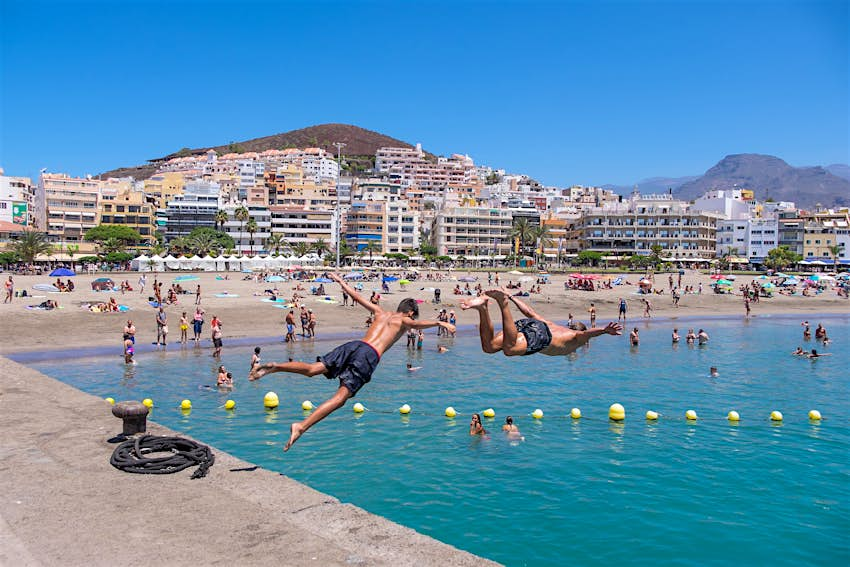
 [Los Cristianos in the Canary Islands where smoking is already outlawed on beaches © Salvador Aznar / Shutterstock]

Spain's other bans on smoking

In 2020 in a bid to curb the spread of COVID-19, Spain banned smoking in outdoor public spaces where people can't maintain a social distance of at least six feet. Galicia, in northwestern Spain, first introduced a ban on smoking in streets, bars and restaurants and this was adopted by the country’s health minister and brought in nationally.  

Read more from source at Lonely Planet here.

Sunday, June 13, 2021

Joan Subirats: Cities are spaces where things can change for better (int...


"A radical change is taking place. Cities around Europe – through platforms, movements and international networks – are creating paths for citizens to participate in and influence politics directly. Joan Subirats, one of the founders of Barcelona’s municipalist platform Barcelona en Comú, discusses how cities can deal with uncertainty and provide a new type of protection, reverse the trend of tech giants owning all our data, and even defy their nation-states on issues such as refugees."

Sunday, May 9, 2021

New green oasis for Barcelona residents

[Photo: MataAlta]

"Terrats d'en Xifré is one of the initiatives promoted by the Barcelona City Council to further humanize the city.

It is a green space of 1,500 square meters with a garden that is located on the roof that connects six buildings between the neighbourhoods of Born and Ciutat Vella."

Read more from source at Barcelona Secreta here.

Sunday, August 16, 2020

Barcelona in the red zone for N02 ship pollution


Air Quality map of Europe above:

Maritime traffic has a significant impact on air pollution as ships release NO2 (Nitrogen dioxide) & CO2 etc. into the atmosphere.

Levels of NO2 detected by the @CopernicusEU, Sentinel5P
from Jan to Jul 2020.

Sunday, February 16, 2020

"Australia’s burning questions" -- My latest opinion column for Catalonia Today magazine

[EFE]

The great tragedy of the Australian bushfires -- that even after several months are still consuming huge parts of the country -- is that so much of the destruction is entirely avoidable.
How can this be? Why have more than 1 billion animals perished? Why have over 2,000 thousand homes been destroyed? Why have 23 people died and how is it possible that a total area of land bigger than Portugal or Hungary has already been burnt out?
The simplest correct answer is that Australia has always suffered from these kinds of wild blazes but that this time around the ‘fire season’ started much earlier and the spread of the fires was much wider than usual, with hundreds of them burning out of control at any one time.
Firefighters (most of whom are unpaid volunteers) have been almost completely powerless to stop the hydra-headed infernos because of continued fierce winds and the extreme high temperatures that the fires themselves have partly made worse.
Another major cause of the devastation can be accurately put down to state and federal governments underfunding emergency services for year after year.
ln an attempt to push any responsibility away from his own ultra-conservative party, Prime Minister Scott Morrison has used all kinds of political trickery and lies across the mainstream media (which fully supports him). He has also been widely condemned for choosing to go on holiday to Hawaii during the crisis, as did the relevant state minister from his party.
As well as that, Morrison has repeatedly argued that the global climate crisis is not a factor in this disaster, despite overwhelming scientific evidence showing it undoubtedly is.
As a fundamentalist Pentecostal Christian, he has instead maintained it is all the fault of arsonists or “greenies” who oppose targeted ‘back-burning’ to stop fires spreading. (The Green Party has always supported it, in fact.)
Accusations of climate denial against Morrison have come as thick and fast as the air that has choked the populations of Australia’s big cities of Canberra, Melbourne and Sydney over periods of weeks and months.
Even several former leaders of the PM’s own party have called for rapid action against carbon emissions and emergency policies to combat the years-long drought across the nation.
In many Australians’ experience, these fires have come on top of continuing and severe tap water shortages in many of Australia’s rural towns. Some, such as the small rural village of Murrurundi (located in a once relatively fertile area) have already run out of water and are having to buy in supplies privately. An increasing number of towns are expected to follow this disturbing practice soon.
Of course, water running low in Australian drought periods is nothing new.
What is causing outrage though amongst groups as diverse as farmers and environmentalists, is the massive (and often unmeasured) amounts of natural water from rivers, lakes and underground sources that are being sold off to private companies.
The Indian (multi-national) mining company Adani (which has the absurd, double-speak slogan of “Growth with Goodness”) extracts coal from the earth, among other things. It runs a business that is a major cause of global warming through carbon emissions and it requires large amounts of water in the coal cleaning process.
Adani -- which has paid not one cent of company tax in Australia -- will be allowed to siphon off 12.5 billion litres of local river water up until the year 2077. Another of its mines is being given $4.4 billion in public subsidies from the government. An open secret muddies the waters here: mining industries have been major financial donors to the conservative political parties in Australia for many years.
Corruption? You bet it is. For the governing parties, it’s raining money. This at a time when both rain and money are what’s really needed across a land that is dying of thirst and from fires on a biblical scale that Morrison had only ever read about.
[This article was first published in Catalonia Today magazine, Feb. 2020.]

Sunday, February 9, 2020

"The EU's Green New Deal is a colossal exercise in Greenwashing"

Yanis Varoufakis, leader of DiEM25 (Democracy in Europe Movement 2025) and progressive left member of the Greek parliament argues in The Guardian newspaper that a major mistake is being made...

"Ursula von der Leyen’s signature proposal co-opts the slogans of climate activism, but has none of the substance.


Emergencies tend to reveal our true priorities. When our house is burning down or the storm waters are flooding in, we hold on to what we value most, and leave the rest behind.
A decade ago, the leaders of the European Union found themselves facing such a moment. With the French and German banks falling into a black hole, they did whatever it took to save them. Between 2009 and 2013, European governments channelled €1.6tn (£1.36tn) to Europe’s bankers, while imposing stringent austerity upon the European citizens they pledged to serve. When in 2015 they realised that more support was necessary, the European Central Bank printed €2.6tn over just four years.
Now, Europe confronts a crisis of far greater severity: a climate emergency. And so, last month, EU commission president Ursula von der Leyen unveiled the European green deal, a €1tn, 10-year plan to reduce the EU’s greenhouse gas emissions by at least 50% compared with 1990. “This is Europe’s man on the moon moment,” said Von der Leyen.
At first, one cannot resist comparing the two sums and the priorities they reveal: more than €4.2tn to save Europe’s financial sector; €1tn to save our world."
Read more from source here.

Saturday, January 18, 2020

"The Inner Life of Animals" -- My latest book review for Catalonia Today magazine

[Pic: Club Hípic Raúl Pinteño]
Can horses feel shame? Do deer grieve for their dead? Why do roosters deceive hens?

What about humpback whales that act as if they’re grateful, adulterous magpies or pigs that have learnt their own names?

These are the kinds of questions that are asked by people who spend lots of time around animals because our life experiences are full of stories that seem to support an obvious ‘Yes’ answer.

In Peter Wohlleben’s book, “The Inner Life of Animals” -- translated with warmth and clarity by Jane Billinghurst -- we get as close as (currently) possible to understanding how the creatures we share the planet with are much more complex than we might at first think. 

With our inbuilt tendency to ‘humanise’ animal behaviour, we like to compare them with our own species but this book has a remarkable way of putting us into their minds, bodies and hearts. 

Some of these are the author’s own pets and farm animals and his lifetime’s sharp observations of them bring the reader genuine insight.

The other great strength of this book is also one of it’s few weaknesses. We are moved and educated in equal measure with page after page of compelling anecdotes about the uplifting and even empathetic side of animals (squirrels adopting orphans and even cross-species pseudo-families) but there is only featherweight attention given to the cruelty that also runs through the animal world. 

Where, for example is the fox that only eats the fatty jowls and throat of the sheep and leaves it to die in slow agony with the rest of its body intact? 

If we humans are merely animals (and this is a biological fact of evolution that Wohlleben rightly points out) then surely the cruelty we routinely practice can also be found in our four-legged relatives too.

Wohlleben tells us with loving, enthusiastic praise about the crow that goes tobogganing for fun. He overlooks the cat that tortures and toys with the mouse for nothing but amusement. The book would be stronger if this was acknowledged because it would add a few fistfuls of balance. 

Where the book also charms the reader is in overthrowing misconceptions we generally have. Fish have no memory? Pigeons are “bird-brained” or pigs are simpletons? After reading this work, your mind is very likely to have been changed for good on these and similar questions. 

He also counters other popular notions by illustrating that ‘the law of the jungle” and “survival of the fittest” are only parts of how animals relate with each other.

Organised cooperation amongst individuals and groups is surprisingly common and it seems that many creatures (such as red deer) have the ability to switch off their hunger impulses when the seasons dictate this. 

When it comes to domesticated animals though, in a brave and convincing section, Wohlleben also shows that some animals undoubtedly enjoy their work with men and women.

He writes about horses happily clear forests as well as shepherd dogs engaged in keen “partnership” with their owners. This is only after stating of course, that “most animals used by people lead dismal lives.” 

Before now running his own home farm, the author worked in forestry commission woodland for 20 years and he has also written a book about the hidden life of trees.

Reading that might even persuade me to stop using paper.

[This book review was first published under the title ""Animal feelings" in Catalonia Today magazine, January 2020.]


Sunday, September 22, 2019

"Drought Has Revealed Spain’s Long-Submerged ‘Stonehenge’ "

[Photo: RUBEN ORTEGA MARTIN/ RAICES DE PERALEDA]


When I passed through this region only a few summers ago, from a train I wrote in 'Slow Travels in Unsung Spain'... 

"swerving around a hill, a vast body of water suddenly appeared – a statement of abundance and life in this hard land, like something biblical from a Leonard Cohen song.

This was the Embalse de Valdecañas [reservoir] that marks the start of Extremadura province, being connected to the more than 1,000-kilometre-long Tajo (or Tagus) river that sweeps into Portugal: a river that two millennia ago the Roman poet Ovid sang the praises of for its gold-bearing sands."

Now, as ALYSSA MCMURTRY found, this scene is the exact opposite:


"THIS SUMMER HAS BEEN UNUSUALLY scorching across Europe and beyond, and things have only grown more intense in the already hot and dry region of Extremadura in Spain. 

Months into an official drought that could be developing into a mega-drought, local farmers are facing the loss of hundreds of millions of euros. Many think this is just a sign of things to come.


Droughts, and the way that they strip the land of plant cover and drain lakes and reservoirs, for all the problems they cause, are often a boon for archaeologists. 
The water level of the Valdecañas Reservoir in the province of Cáceres has dropped so low that it is providing an extraordinary glimpse into the past.
“All my life, people had told me about the dolmen,” says Angel Castaño, a resident of Peraleda de la Mata, a village just a couple miles from the reservoir, and president of the local cultural association. 
“I had seen parts of it peeking out from the water before, but this is the first time I’ve seen it in full. It’s spectacular because you can appreciate the entire complex for the first time in decades.”
The dolmen he’s talking about is known as the Dolmen of Guadalperal, the remains of a 7,000-year old megalithic monument consisting of around 100 standing stones—some up to six feet tall—arranged around an oval open space. It takes hours of hiking to get to the dolmen, which is now a few dozen yards away from the edge of the tranquil blue water. 
Visitors today are more likely to see deer than guards. Traces of aquatic plant life in the sand show that the site is dry and accessible only temporarily."

Read more from ALYSSA MCMURTRY's  wonderful article for Altas Obscura here  and my new book here.


Sunday, August 18, 2019

"Spain's coal miners continue to wait for their country's Green New Deal"

"Credit: 
Lucia Benavides/The World"
 "Spain’s government isn’t getting much done these days.

No political party won a majority in the nation’s general elections in April, and parliamentary negotiations to form a new government remain at a standstill. If a new government can’t be formed by Sept. 23, Spanish voters will go back to the polls in November for another general election, in what would be the country's fourth in four years.
One of the many projects on hold is Spain's “ecological transition” — a push to close all of the country’s coal mines and transition to renewable energies, like wind and solar.
People in Spain’s northern region of Asturias are anxiously waiting to see how things play out. They’ve been mining there for 150 years. But today, the industry is almost dead.
During a recent weekday at the San Nicolás coal mine, dozens of miners — mostly young men — walked out of their shift around 2 in the afternoon, in a hurry to get home and eat lunch. The underground mine is located in a valley, surrounded by lush, green hills. At its peak, the mine employed around 2,000 people — today, about 200 work there. It’s the last working coal mine in all of Spain.
Gorka Peña, 36, has been working at San Nicolás for nine years. He says his father was also a miner, and he didn’t expect to end up in the trade himself.
“There’s no future here, no youth,” Peña says. “The towns are becoming more depopulated, its residents are getting older. You don’t have anywhere to go, so you have to migrate.”
Last October, the leading mining union struck a deal with Spain’s Socialist government to funnel 220 million euros ($246 million) into the region over the next decade, which would include retraining programs and investment in new industries.
“In Asturias, what we’re asking for and what we need is for this 'ecological transition' to be exactly what it says it is,” says José Luis Alperi, the union’s spokesperson. “That is, that no one be left behind.” "
Read more from Lucia Benavides article at PRI here.


Saturday, May 4, 2019

Microplastics blowing into remote Pyrenees mountains

[Photo: Bob Edme/Pool via Reuters]


"Microplastics have been discovered in a remote area of the French Pyrenees mountains [close to the border with Spain/Catalonia.] The particles traveled through the atmosphere and were blown into the once-pristine region by the wind, according to a new study published in Nature Geoscience.
This is just the latest example of the “hidden risks” posed by plastics that humans cannot see with the naked eye. For now, governments and activists are focused on avoiding plastic litter in the environment, driven mainly by concern for wildlife and worries over unsightly drinks bottles or abandoned fishing nets on beaches. Plastic bag usage has been cut in many parts of the world, and various projects are exploring how to gather up the floating plastic waste in oceans. But little has yet been done to deal with polluting plastic particles that are usually invisible.
There is, however, growing concern about these micro and nanoplastics, classified as particles smaller than 5mm. These come in part from deliberately manufactured sources, such as scrubbing materials in cleaning and cosmetic products, but also from secondary sources, such as the inevitable breaking up or wearing down of larger items such as tires or fibers shed from tumble driers and washing machines. We are becoming increasingly aware of their presence but know surprisingly little about how much is out there, how it behaves in our environment and what the implications are for human and animal well-being.
As more studies publish their findings we are learning that microplastics are more widespread than we imagined, and that they are found in every environmental system investigated. Plastic particles have been found in record-breaking quantities in river sediments in the UK, for instance, while a study in Paris found plastic fibers in wastewater and the air."
Read more from source here.


Wednesday, December 12, 2018

"Climate change refugees?"

[Photo credit: 
David Gray/Reuters]
"Millions of people have to move each year due to natural disasters and the impacts of climate change.

We talk about "climate refugees"...but [in a legal sense] they don't exist. In fact, those displaced by climate change have no special protections under international law. But that may be changing."

The UN is finally recognising this fact.

More from source at PRI here.

Saturday, August 18, 2018

"Revealed: the aristocrats and City bankers who own England’s grouse moors"

"This Sunday is the ‘Glorious Twelfth’, the start of the grouse shooting season. But who are the landowners who own England’s vast grouse moors?


As Who Owns England has previously exposed, grouse moor estates cover an area of England the size of Greater London – some 550,000 acres – and are propped up by millions of pounds in public farm subsidies.
Even the Spectator calls owning a grouse moor “screamingly elitist” – and surprise, surprise, around half of England’s grouse moor estates turn out to be owned by the aristocracy and gentry, whilst the other half are owned by wealthy businessmen and women, City bankers, hedge fund managers, and Saudi princes.
Here’s the ten largest grouse moors by area, with their owners, and the farm subsidies their estates received from the taxpayer in 2016:
Grouse Moor EstateAcreageFarm subsidies (2016)Owner
Raby Estate30,000£683,579Lord Barnard
Gunnerside Estate26,020£100,632Robert Warren Miller, businessman. Estate registered offshore
East Allenheads & Muggleswick26,000£145,288Jeremy Herrmann, hedge fund manager
Abbeystead Estate23,000£57,228Duke of Westminster
Wemmergill Estate15,676£272,664Michael Cannon, businessman
Lilburn Estate14,678£1,550,699Duncan Davidson, founder of Persimmon Homes
Bolton Abbey Estate13,500£139,708Duke of Devonshire
Bollihope Estate12,600None registeredSheikh of Dubai
Linhope Estate12,000Not knownDuke of Northumberland
Strathmore English Estates11,169£279,609Earl of Strathmore
Totals184,643 acres£3,229,407
You can read more about other grouse moor owners and the investigation methodology later in this blog post.

THE DESTRUCTIVE IMPACT OF GROUSE MOORS:

The fact that a tiny elite owns England’s grouse moor estates matters, because of the disproportionately large environmental impact of managing grouse moors. Grouse moor gamekeepers are responsible for the illegal persecution of hen harriers (we should have 300 pairs in the English uplands – it fell to 4 pairs in 2017), and for wiping out huge numbers of foxes, stoats and other natural predators of grouse.
Moreover, the slash-and-burn practices used to maintain grouse moors – burning heather, often on rare blanket bog – have been shown to dry out and degrade peat soils.  This releases soil carbon, adding to global warming, and reducing the resilience of our uplands to the impacts of climate change: desiccated bogs mean worse wildfires when it’s hot (like Saddleworth Moor) and more flooding when it rains (like the flash floods that washed off Walshaw Moor in winter 2015, deluging Hebden Bridge). It also makes grouse moors look like the surface of the moon, as I found on a visit to one in the Peak District..."
Read more from source here.