Showing posts with label catalonia. Show all posts

Saturday, September 30, 2023

"90 seconds exactly" (Translated from the Catalan original “Tot just noranta segons” with the author, Antoni Cardona)


Photo: https://www.corneliakraft.com/

When Nadia was running downstairs

from the 6th floor, doing up her dressing gown,

cursing the wind and her mistake

she came across the boy from door 4, floor 4

the one who never says good morning


She put the brakes on her crazy run

having seen the second floor was wet,

she was about to fall near the front door:

her slippers were loose

and she hadn’t found the money nor time

to go to the shoe-repairer 

…her precious headcovering flew

and landed at Magda’s feet

the new postwoman, who took it and put it

with sound judgement on a parked motorbike.

Then Fatima, from the halal supermarket, fell

in love with its bright colours,

and although she didn’t wear it,

against her mother’s advice,

she took it thinking to give it

to her close friend Raissa,

who would never dare to go outside

without a hijab covering her hair.

And from the doorway, when Nadia sees

Fatima taking the headscarf off the motorbike,

and the great joy she had on her face

she gave up her claim on the very thing

that Karim, her husband,

didn’t know

was a gift from a clandestine love

with whom, years before,

in Morocco, Nadia had dreamt of a future.


----------------------------------------------------------------------------------------------------


Tot  just noranta segons 


Mentre la Nàdia baixava l’escala corrents

des d’un sisè pis, cordant-se la bata,

maleint la ventada i el seu error;

es creuava amb el noi del quart quarta, 

aquell que sempre li nega el bon dia;

la cursa boja frenava uns instants 

veient el terra mullat de la planta segona;

ensopegava a prop de la porta d’entrada: 

les sabatilles li anaven balderes 

i no havia trobat el moment ni els diners 

per dur al sabater...


...el seu objecte preuat voleiava

fins aterrar just als peus de la Magda, 

la nova cartera, que amb molt bon criteri 

el deixava damunt d’una moto aparcada.

Al moment la Fàtima, del súper halal

s’enamorava de la peça de roba 

de colors tan llampants,

 i malgrat que, desoint els consells de sa mare,

ella  no en duia, la prenia pensant 

regalar-la a la Raissa, l’íntima amiga

que mai no gosaria anar pel carrer

 sense hijab cobrint-li els cabells. 


I quan la Nàdia veu, des del portal, 

la Fàtima amb el vel a les mans,

i amb quanta il·lusió aquesta se’l mira,

renuncia a reclamar el mocador 

que el seu home, en Karim, 

no sap que va ser el regal 

d’un amor clandestí

amb qui, uns quants anys enrere, 

al Marroc, la Nàdia somiava un futur.


Antoni Cardona i Torras

2022


Monday, September 4, 2023

Saturday, July 8, 2023

Video: Launching my book "Slow Travels in Unsung Spain" in Barcelona


Reading two short extracts and doing a Q and A session with an audience at Fahrenheit 451, an independent bookshop in Barcelona. Gary Gibson from Blanquerna Ramon Llull University kindly introduced me.

Thursday, June 15, 2023

A coincidence?

On the same day that the neighbouring region's new ultra right culture Minister is installed,...at a cafe in a coastal town in Catalonia a Black man is refused service by a waiter who racially insults him. 

Sunday, June 11, 2023

Anaïs Nin started her famous diary in Barcelona?


"In Barcelona I didn't have the impression that the absence of my father was definitive. I thought it could come at any moment. We saw his family, his parents, his grandmother...It was his homeland...".

A blog (in Catalan) on the childhood of the great writer in Barcelona.

Sunday, May 21, 2023

"Demand for Garraf's international schools is growing..."


News video of the school where my wife Paula teaches.

(Of course, not all the students/families there are "foreigners" because there's plenty of local Catalan/Spanish kids too.)

"These days the educational centers are already thinking about the pre-registration periods for the next school year starting in September, including the international schools in the region. These are private centers that are noticing a notable increase in demand, from families who want to send their children to school in an educational system different from the one designed by the Catalan administration. The arrival of new foreign families in Garraf is one of the factors that explain this increase."

Sunday, May 14, 2023

"A cursed woman:" Jordi Corominas i Julián: Clotilde Cerdà en Mujeres Malditas

Jordi Corominas i Julián: Clotilde Cerdà en Mujeres Malditas: "A  biography of Clotilde Cerdà, multifaceted and [relatively] unknown." You can listen to it at the link above.

"Clotilde Cerdà (1861-1926) was a child prodigy, world-famous harpist, anti-slavery activist and defender of women's rights. Everything indicates that the author of the "Ensanche", Ildefons Cerdà, was not her biological father."

Saturday, April 15, 2023

"Cubism was born in Africa" – Pablo Picasso


On April 8, 1973, Pablo Picasso put down the brush for the last time. 50 years later, the Spanish painter leaves behind an abundant body of work, rich in tens of thousands of paintings, engravings,...


In the early 1900s, in Europe, the era of colonial expansion was in full swing and tribal art still interested only avant-gardists such as Henri Matisse or André Derain, founders of Fauvism. Before being caught up in African know-how, Picasso first set out to discover Catalan primitive art. 

He made "a journey to the depths of Catalonia, where he discovered a medieval Iberian creation that strongly affected his technique," says Juliette Pozzo, in charge of Pablo Picasso's personal collection at the Musée national Picasso-Paris...

Negro art? Don't know! ", quipped Pablo Picasso to an art critic in 1920, in his own tone without laughter. The Iberian artist, born in 1881 in Malaga, Spain, nevertheless collected African, Oceanic, Hispanic and more broadly, extra-Western art objects. This is in any case what testifies the finds in his private collection and the images of his workshops, full of statuettes, tools, ornaments, masks, totems ...

Picasso was an experimental painter, both one of the most acclaimed and the most criticized of modern art, "for his ultra misogynistic side and very violent towards women," says Olivia Marsaud, head of visual arts at the French Institute of Senegal. 

A little prodigy of drawing from the age of 14 who "could have been one of the greatest classical artists of the twentieth century," says Gilles Plazy, one of his biographers."

Read more from source here.

Sunday, March 26, 2023

"More allergies, more jellyfish in the sea, less 'pata negra' ham..."


"It is estimated that by 2050 half of the beaches on the Mediterranean coast will have disappeared.

The rise in sea level already threatens the El Maresme railway line, the most used in Catalonia..."

Read more from source at Spain News here.


Sunday, March 19, 2023

"Transforming broken skateboards into drinkable water:" Barcelona meets Africa


Video focusing on the volunteer work of John French, an Australian artist (and friend of mine) living in Barcelona. MOSS, the skating group organisation he leads is helping to create new water resources for townspeople in Swaziland/Eswatini, Africa.

Friday, February 24, 2023

"Why Read Homage to Catalonia By George Orwell? A Short Review"


Rightly describing George Orwell as "one of the great commentators of his own era." Personally, I'd go further and say of any era in the English language. 

Orwell had an ability to get to the visceral in a way that few have. Shakespeare regularly did. James Baldwin also did.


Tuesday, February 14, 2023

"Grabbing Granados" – My latest article for Catalonia Today magazine

[This article* was first published in Catalonia Today magazine, Feb. 2023.]

The Barcelona street named after Granados. ANDREU PUIG.

A huge boat is sinking in The English Channel. A man is clinging on to the side of a tiny raft, only big enough for one woman to kneel on. Soon, both drown in sight of other passengers.

According to witness Daniel Sargent, this is what happened to Catalan composer and pianist Enric Granados i Campiña and his wife Amparo Gal, who was too heavy to get into a lifeboat. Granados apparently refused to leave her alone in the sea and tragically on March 24, 1916 their six children became orphans.

In this ill-fated transatlantic crossing, returning from a tour, the boat they’d been on (the French-flagged Sussex) was mistaken for an enemy minelayer craft and torpedoed and sunk by the Germans. Only days earlier Granados had been playing piano in the White House for US President Woodrow Wilson.

Born in Lleida in 1867 and the son of a colonel (originally from Spanish Cuba) and a Galician mother, at the age of 10 he began to study music and gave public concerts in his hometown (though his first major recital was in 1890, when he was 23 years old.) Still a child, he moved to Barcelona and was enrolled at the Escolania de la Merced.

As is so often the case though with historical figures, myths and disagreement surround important areas of Granados’ life. The financial impact of his father’s premature death at just 57 is unclear but it seems likely that his mother received the correct widow’s military pension and kept the wolves from the door in this way.

What is known is that Enric got a job playing piano for five hours a day at the Café de las Delicias, but around the time he moved his ivory tinkling gig to the Café Filipino, the Catalan impresario Eduardo Condé was also funding him to a very pretty tune as music teacher of his children.

In fact, many of the best Catalan pianists of recent times came out of the music academy in Barcelona that bore Granados’ name. The institution became a centre for a theoretical-practical method for piano pedals that Granados had developed from the teachings he’d held onto from living in Paris two years before.

His masterpiece as a composer is the suite for piano “Goyescas” (1912-14) inspired by works of the Spanish painter Francisco de Goya. Partially first performed at the Metropolitan Opera House in New York, it helped lead to his White House triumph. Despite these kinds of success, Granados went on to suffer from extreme stage fright later in his performing life, according to one source, even begging that he not be forced to play.

I wanted to know more about this man with the fruity name, his name having been given to one of my favourite streets in the Catalan capital. With only one slow lane of traffic, it’s a gently sloping oasis of near-calm and almost-quiet when all around is everything but that, lined with superb restaurants and quaint little speciality shops or delis at both ends.

I grab any opportunity to walk up or down this street. Sometimes I go out of my way to be on it, a part of it, while I think about the man too these days.


[*Most likely this will be my final piece for Catalonia Today magazine. Apparently for economic reasons, it has been cut in half: down to just 32 pages. This means independent journalists who are not directly employed have been also cut. I wrote for them between 2008 – 2023 and would like to thanks all those involved in the production of the publication.]

Sunday, January 29, 2023

La mà que va signar el paper* (The Hand That Signed The Paper) – A poem by Dylan Thomas


 (*Translated into Catalan below with Antoni Cardona)


La mà que va signar el paper va enderrocar una ciutat;

Cinc dits sobirans van posar taxes a l’alè,

Van duplicar els morts a la terra i van partir pel mig un país;

Aquests cinc reis van fer que morís un rei


La poderosa mà porta a una espatlla inclinada,

Les articulacions dels dits estan comprimides amb guix;

La ploma d’oca ha posat fi a l’assassinat

Que posa fi a la conversa


La mà que va signar el tractat va generar una febrada, un excitació

I va créixer la fam, i van venir llagostes;

És gran la mà que manté domini sobre

L’home mitjançant un nom gargotejat


Els cinc reis compten els morts però no suavitzen 

La crosta de la ferida ni fan copets al front;

Una mà governa la pietat i una mà governa el cel;

Les mans no tenen llàgrimes per vessar.


Original in English:

The hand that signed the paper felled a city;
Five sovereign fingers taxed the breath,
Doubled the globe of dead and halved a country;
These five kings did a king to death.

The mighty hand leads to a sloping shoulder,
The finger joints are cramped with chalk;
A goose’s quill has put an end to murder
That put an end to talk.

The hand that signed the treaty bred a fever,
And famine grew, and locusts came;
Great is the hand that holds dominion over
Man by a scribbled name.

The five kings count the dead but do not soften
The crusted wound nor pat the brow;
A hand rules pity as a hand rules heaven;
Hands have no tears to flow.

Sunday, January 1, 2023

Safia El Aaddam’s “Immigrants’ daughter” (2022)


"Lunja is brave. A warrior. Born in a small Catalan village, of Amazigh origin, an indigenous [group] of North Africa, from childhood she confronts racism, poverty,...sometimes even her own culture." 

With this YA novel, the author puts mental health on the table and how it gets worse due to being an immigrants’ daughter and racialized as of African origin."

First found at Literary Rambles.


Saturday, December 24, 2022

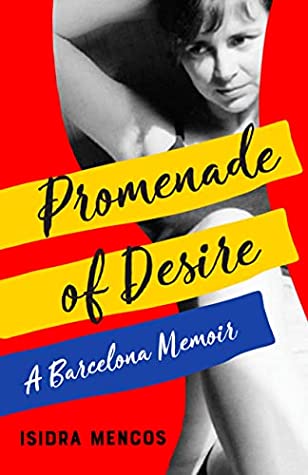
"Promenade of Desire" – My latest review for Catalonia Today magazine


[This article was first published in Catalonia Today magazine, Dec. 2022 under the title “Promenade of multitudes”]


A really good book is a universe away from its marketing.

One vibrant new piece of nonfiction, “Promenade of Desire, A Barcelona Memoir” is being promoted as “a sensual coming of age story: From Catholic virgin to Mata Hari as Spain moves from dictatorship to democracy.”

All true enough, but as well as getting a grip on the massive changes in Barcelona from the 1960s until just after the Olympic games in the early 1990s, the author Isidra Mencos charts a deeply internal arc.

Apart from the apparent honesty, what I like most about this raw account of an individualist’s first few three decades is the richness of self-discovery it contains.

The author’s sexual desire is undeniable but so is her lust for experience itself.

With an equally powerful bravery, she plunges into a subculture of horny squatters, for a while, finding herself most at home with the homeless.

We also witness other improvised or adapting versions of her: as an uncertain teenager and then young adult, still racked with a punishing guilt.  

Born to an affluent, emotionally-cold lawyer family (from the city’s high up Sant Gervasi-Bonanova area) who slowly fell on hard economic times, Mencos tellingly relates how her closest childhood at home was with their housekeeper/childminder/cook.

Quica, a semi-literate Andalusian woman who’d lost a husband and ten of her fourteen children during their infancy, was an anchor for the inquisitive young girl even during night-time bad dreams.

Mencos’ pure affection for this kind of person (who makes it possible for the rich to live like the rich) is touching.

It’s a clear sign that she transcended at least a snobbery of neglect. The words, ”I bawled at her death as I had not done for my lost grandparents,” poignantly ends one section in the book.

Looking at wider themes, identity is a major one. The author puts herself in the category of a “good girl,” even a “girlie girl” with “a quiet demeanor that dissolved with the ice cubes at the bottom of [her] second drink. Out came a fearless woman who declared her literary opinions with confidence and subjugated a man with a swing of her hips.” 

In fact, alcohol became a major problem for her and some of the men who were her live-in lovers. Violence and abuse followed.

The details are harrowing but also somehow instructive and a kind of balance comes in the shape of a new half-American half-Japanese female friend. “A role model for me because I still lived at half speed, with a split personality,” writes Mencos.

As Barcelona remodeled and replenished itself for the 1982 Olympics, the author herself was doing something similar as a part-time translator of articles for the official games committee. Then she set a routine for passing TOEFL and SAT exams so she could do a PhD in the USA.

Ultimately, she is healed: by herself, by quality therapies, probably too by discovering a genuine, transporting passion for the “unique vocabulary and no fears, no confusion” of salsa music and dance.

Here, we see a Barcelona that would’ve even been foreign to many locals, an immigrant/latin underworld of afflicted aficionados and slaves to a beat that was new to these European shores.

One of the great qualities in this book is that we also see a person who is now unafraid of so much she had been. 


Sunday, December 4, 2022

Rewards for you

Doctors across most of Spain are on strike (Madrid) or planning strikes (Catalonia included: 25,26 january) 

They are protesting the continuation of government under-funding, salary freezes, creeping privatisation and the countless hours of over-work that this neglect creates for them and all public hospital staff.

This is how we as a society are really saying thank you to them for risking their health and lives since the Covid pandemic started 3 years ago this month.

Sunday, October 23, 2022

"Early doors day" -- A poem

 (This poem was first published in Burrow here at Old Water Rat’s Publishing )


soft lines of fog trees

not the desert
but quiet like the desert

we look at the stars to see 
what we come from

body not yet the enemy
light slowly befriends you

Monday, October 17, 2022

"It has now come to this" -- My latest opinion column for Catalonia Today magazine


Cars and vans parked in a street. QUIM PUIG.

[This article was first published in Catalonia Today magazine, Oct. 2022.]


The following is based on current and factual information…

How would you fancy sleeping in a car or a van?

Rather than the now antiquated 20th century idea of having your own bed in something as outdated as a house, for the price of two euros a day our new business in Barcelona will fulfill this fantasy for you. And for only 60 euros a month on a prime real-estate public street!

Naturally, there are those in the city council who want to curb your right to get your shut-eye shut out of buildings but they just don’t understand an adventurous spirit. Don’t let them tell you what to do and where you can and can’t do it. You work hard every day and you deserve what we call a “micro space” to match your macro dreams.

We are opening in a small, quiet and almost-deserted square in the Sant Andreu district. In the same location you can rub shoulders with customers of our beehive flats. On top of all that, for a mere 90 euros per month you can go inside, hang out on a plastic chair for the entire day, have a shower, store food, use the complimentary microwave, or even wash your clothes. Now that’s what we call livin’, baby!

Yes, it’s true that those small-minded lefty bureaucrats in the council have assured everybody that our operation won’t actually be legal but in the meantime you can make us your home. We’ve traded in the semi-legal shadows for years so we’re at home with that, even if you’re not!

OK, it’s not exactly what most people call home and it’s temporary but let’s not quibble about semantics. You need a mattress and we can rent you one. That’s just free-market capitalism in operation and who should stand in the way of your good night’s sleep. So, wind up the windows, click the locks on the doors and snuggle up for sweet dreams!

Oh, and another thing that you don’t need to concern yourself with. We admit that municipal tow trucks have already taken some of the sleeper vehicles away but this is just a minor inconvenience. In the unlikely event we are discriminated against again in this way, we’ll refund half of your fee and find you another vehicle to nod off in. You can’t say fairer than that, can you?

As for our premium accommodation we even have a waiting list for others to live in homes that are no bigger than three square metres. We acknowledge that at the moment those are also prohibited in Barcelona but they’ve got them in Japan and “anything-goes Madrid” so why not here too?

I know you’ve heard stories of paper thin walls and hearing other people’s alarms going off and being kept awake by neighbour’s snoring…but just relax. Humans can get used to anything. Eventually.

The truth is as simple. You just don’t have a right to human-sized accommodation anymore. Society can’t deliver this to everyone so some people need to learn that they aren’t lucky enough to be comfortable, secure or well-housed. A lie-down bed isn’t a right, it’s a privilege!

Sunday, September 18, 2022

Baldwin's Barcelona -- My latest article for Catalonia Today magazine

(Photo: Allan Warren)

The book must always come before the author,” said Nobel Prize winner, VS Naipaul. 

Unlike another genius such as James Baldwin, Napaul spent his entire brilliant, vicious life seemingly trying to prove himself wrong.

For Baldwin, words came first. By becoming a child preacher in his native New York City he avoided the Harlem ghetto.

He also soon found the power of images and a sense of himself as gay and American, an American “negro”: the mid 20th century polite English word for “black”.

(I remember the shock of hearing the other, offensive ‘N-word’ when my cousin in Sydney used it as the name for his pet dog. I was seven years old at the time but even then somehow I knew how wrong that was.)

On a wider tour of Iberia, Baldwin (who died in rural France in 1987) came to Barcelona six decades ago last May.

He met the poet Jaime Gil de Biedma and stayed in his basement in Carrer Muntaner – “blacker than my reputation,” he called it – and they spent seven frenzied days together with [current mayor of Hijar] Luis Marquesán.

Biedma wrote in his diary: “Life, since Monday, when I met Jimmy Baldwin, has been so hectic that today I find myself in a state of real moral and physical exhaustion, aggravated by the intellectual dullness that comes with an alcoholic regime such as the one I have been following.”

According to Marquesán’s biographer, Miguel Dalmau, they went to the picnic areas of Montjuïc, “where they saw the landscape of misery, the shantytowns in disarray on the mountainside.” Ultimately it all led to Baldwin’s new friend Biedma questioning himself about whether he was a coward.

Despite the stimulating week, it seems fair to say that the Catalan capital was a place of mixed fortunes for Baldwin.

As reported in this magazine in October 2019, the publisher, Lumen, “had asked Barcelona photographer Oriol Maspons to advise on publishing the book ‘Nothing Personal’ by James Baldwin and Richard Avedon, but his advice was ignored.

Hurt, he and other photographers published a signed ad in the magazine Destino, criticising the indifference shown towards a masterpiece dealing with the US’ racist and classist system.”

Fortunately though, one of Baldwin’s books, ‘Beale Street Blues’ has finally found its way into a Catalan translation, thanks to the publisher Edicions 1984 and the work of Oriol Ampuero.

He launched it along with professor and writer Josep-Anton Fernàndez on June 13 at the Sants bookshop La Inexplicable.

Baldwin’s work, like so many others, was censored in Spain during the Franco years, but Barcelona played another part in his local history when the US writer Nicholas Boggs was a recent writer-in-residence at Jiwar on Carrer Astúries (founded by two Barcelona residents, Mireia Estrada Gelabart and Moroccan-Canadian Ahmed Ghazali). Boggs spent his time co-editing and writing the introduction to a new edition of Baldwin’s ‘Little Man, Little Man: A Story of Childhood.’

He is also continuing work on his manuscript in progress about love and race in Baldwin’s life and work at the Department of English at New York University.

I share Boggs’ fixation. It knocked me sideways when I read Baldwin’s novel, ’Tell Me How Long the Train’s Been Gone’, during lockdown in spring 2020 and I’ve barely left his words untouched since then.

Reading James Baldwin (or listening to his captivating voice) is like having a fogged-up window wiped clean. Now the view can be seen for what it is, whether picturesque or hideous.

Baldwin’s penetrating work, too, is now starting to be seen more and more for what it is, both in Catalonia and across the wider planet.

[This article was first published in Catalonia Today magazine, Sept. 2022.]