On the same day that the neighbouring region's new ultra right culture Minister is installed,...at a cafe in a coastal town in Catalonia a Black man is refused service by a waiter who racially insults him.
Showing posts with label racism. Show all posts
Showing posts with label racism. Show all posts
Thursday, June 15, 2023


Sunday, January 1, 2023
Safia El Aaddam’s “Immigrants’ daughter” (2022)

"Lunja is brave. A warrior. Born in a small Catalan village, of Amazigh origin, an indigenous [group] of North Africa, from childhood she confronts racism, poverty,...sometimes even her own culture."
With this YA novel, the author puts mental health on the table and how it gets worse due to being an immigrants’ daughter and racialized as of African origin."
First found at Literary Rambles.
Tuesday, April 26, 2022
“There is only one race: the human race.” -- Rita Levi Montalcini
 |
Marking her 100th birthday, my 2009 translation of a manifesto by eleven Italian anti-racist scientists that begins with the words:
“There is only one race: the human race.”
These were the words of scientist Rita Levi-Montalcini (also attributed to Gandhi and Satyendranath).
My English translation (from a Spanish version) can be read below:
I. Human races do not exist. The existence of human races is an abstraction that has come about from a false interpretation of the small physical differences that we feel we perceive. It comes from mistaken “psychological” associations: differences interpreted from a basis of secular prejudice. These abstract subdivisions are founded on an idea that humans are made up of groups that are, biologically and hereditarily, greatly varied.
This is pure invention that has always used arbitrary classification between men and women as better and worse and in this way discriminates against those at the extreme (always the weakest) after having blamed them for being the key to all evil in every moment of crisis.
II. Humanity is not made up of large and small breeds. It is above all a network of connected persons. Certainly, human beings come together in groups of individuals, communities, ethnic groups, nations and civilizations. But this does not happen because we have the same genes but because we share life stories, ideas and religions, customs and behaviour, lifestyles and cultures.
These groupings are never established from the same DNA; in fact they are subject to profound historical changes. They are formed, changed, mixed, fragmented and dissolved with a speed that is incompatible with the lengths of times required by the processes of genetic selection.
III. The concept of race has no biological meaning for the human species. Analysis of DNA has shown that genetic variation in our species – less than that of our ‘cousins’ the chimpanzees, gorillas and orang-utans – is represented above all by differences between people from the same population, whereas they are less than the differences between populations and different continents.
The genes of two individuals of the same population are, on average, slightly more similar than those of people who live in different continents. Precisely because of these small differences between populations even racist scientists never defined how many races make up the human species. They made estimates ranging between two and two hundred races.
IV. There is a fake and deadly myth that has already been forged: the identification of the “Aryan race” with the image of a warlike people, the winners, ‘pure’ and ‘noble.’ Along with this, there is the theory that much of Europe, India and central Asia is the homeland of the basis of Ind-European languages.
History makes it apparent that it is extremely difficult to identify Aryans as a people in addition to the notion of an Indo-European language that stems from conventional classification. But on the other hand, modern archaeological data indicates that Europe was inhabited in the Palaeolithic era by a population of African origin and in Neolithic times other immigrants came over from the Middle East.
The foundation of present-day Italians is from the same southern African immigrants who today constitute the enduring fabric of life in Europe. Despite the dramatic originality of fascist racism the Italians allied themselves with the Nazi’s due to their identification with “Aryans.”
V. It is a legend that sixty million of today’s Italians are descended from families that lived in Italy a millennium ago. These same Romans built their empire by welcoming people from diverse backgrounds, giving them the status of Roman cives.
The phenomena of social and cultural mixing, which marked the history of the entire peninsula - also including Greeks, Jews, Africans, Hispanics and those seen as "barbarians" - produced the hybrid we call Italian culture. Even though they were dispersed throughout the world and living in small Italian states, Italians continued to be identified with this culture that was global, varied, humanistic and scientific.
VI. There is no Italian race; there is only one Italian people. Italy was only unified as a nation in 1860. Many millions of Italian emigrants in the past often concentrated in foreigner areas. They were considered as, and are, Italian. One of our greatest assets is being mixed with so many people and our exchanges that "cross" physically and culturally.
"Purity of blood" and the "nobility" of the "Nation" have been ascribed to a country that has never existed. It has meant reducing the homogeneity of an alleged biological element in addition to the current populace of Italy’s thousand years of heritage and spreading of cultures.
VII. Racism is at the same time both homicidal and suicidal. Empires became empires due to the coexistence of diverse peoples and cultures, and collapsed when fragmented. That has happened and is still happening in nations with civil wars. To cope with this crisis, they used minorities as scapegoats.
Racism is suicidal not only because it hits those belonging to different peoples but because it also strikes the same people who practice it. The trend of indiscriminate hatred that fuels racism is spreading infectious ideas about any “foreignness” or strange “otherness.” This comes from an increasingly narrow definition of "normalcy".
There are those that do not match up to standard human types. They are "out of line", the "mad", the "weak spirited," gays and lesbians, poets, artists, and alternative writers. All of them are attacked, though it is they who are actually allowed to live and incessantly transform mankind. Every living system is capable of continuing only if it is capable of change, and we, human beings, change with fewer genes and always more with the inventions of our generously disordered brains.
VIII. Racism discriminates, denies relationships, and it introduces fear into various thoughts and behaviours. To defenders of the Italian race, Africa appears as a terrifying threat. The Mediterranean Sea simultaneously separates and unites. From this, the racists claim that there is no "common Mediterranean race."
To reject Africa even further, racist scientists put up a barrier against "Semitic" and "camitas". Science indicated that there is a clear distinction between the genetics of Mediterranean Europe (occidentals) and on the other side, Oriental and African. From the paleontological and genetic point of view the theory that earth’s people originate from Africa is absolutely proven: we are all together in a single race.
IX. Italian Jews are both Jews and Italians. Like all migrant peoples (nobody migrates from free choice, but many do so from necessity) Jews have been spread across the World and have been part of diverse cultures. At the same time they have still retained their people’s identity and religion.
So as in the cases of the Armenians, or the same Italian immigrants: the same thing is happening with migrants from now: African, Filipino, Chinese, Arabs from various countries, peoples belonging to Eastern Europe or South America, and so on. All these people had the painful need to emigrate, but also the luck in the best cases, of enriching themselves by combining their culture with those who gave them hospitality. All were equally enhanced, and where possible, neither one nor the other cancelled out each other.
X. The ideology of the racist bigot is based on fear of "disruption" of their own race. This is totally blind to the fact that many societies recognize that getting married outside their community, even with their own enemies, is fine because they know that partnerships are more valuable than barriers. In addition, human physical characteristics are altered a great deal by the particular living conditions, just as the psychological characteristics of peoples and individuals are not written in their genes.
Cultural mixing is the foundation and basis of hope for progress stemming from the European Union constitution. A racist Italy fragmented into "ethnic" separation, as has happened in the former Yugoslavia, would be devastating now and in the future.
The consequences of racism are the loss of culture and self-expression, homicide and suicide, fragmentation and implosion. These end results are uncontrollable because they are caused by an indiscriminate revulsion towards those who are considered the "other" and not "us".
Signatories:
Enrico Allevi, Professor of Ethics, Istituto Superiore di Sanita, Rome
Guido Barbujani, Professor of Genetics of Populations, University Ferrara
Marcello Buiatti, Professor of Genetics, University of Florence
Lauradalle Ragione, Psychiatrist and Psychotherapist, Perugia
Elena Gagliasso, Professor of Philosophy and Science of Living, University La Sapienza, Rome
Massimo Livi Bacci, Professor of Demography, University of Florence
Alberto Piazza, Professor of Human Genetics, University of Torino
Augustine Pirella, Psychiatrist, Co-founder of Democratic Psychiatry, Torino
Francesco Remotti, Professor of Cultural Anthropology, University of Torino
Philip Temple, Professor of Physiology, University of Torino
Flavia Zucco, Director of Research, Association President of Women in Science, Institute of Molecular Medicine, CNR, Rome
Original version of the Manifesto in Italian.
Sunday, November 7, 2021
Moroccan-Catalan writer Najat El Hachmi talks to Mona Eltahawy about freedom
"The daughters of Muslim families in Europe must face different challenges to defend their individual freedoms and their emancipation as women.
On the one hand, the patriarchal traditions that come from their country of origin, intimately linked with religion.
On the other, the onslaughts of racism from the far right, which discriminates against them whilst calling for them to be relegated to second place as foreigners.
Finally, there are two revived phenomena that make the process more difficult: Islamic fundamentalism and a certain relativism. In the face of all this, what they want is a genuine freedom, unconditioned by origin, class or identity."
See more from original source here.
Sunday, May 30, 2021
"Backlash for Spain's postal service anti-racist campaign"
Backlash for Spain's postal service anti-racist campaign - YouTube
"Spain's postal service is feeling a backlash from its attempt to highlight racial inequality after releasing four stamps of different skin colour and different values."
Maybe if they'd consulted with people of colour before the campaign it could have all been different...
Friday, October 9, 2020
VIDEO: "How Brexit Snuck Up On Everyone"
With Brexit no deal now very likely, this insightful short video shows how since the moment the UK joined Europe (at least politically) there's always been a campaign to leave.
Also focuses on UKIP's use of fear and national symbols.
Sunday, March 1, 2020
Nobody says it better...
I've never read anything that undestands what's behind support for Brexit or explains it better...
Definitely worth reading from start to finish.
A.A. Gill (Sunday Times journalist and food critic) writing about Brexit before his death in Dec 2016:
“It was the woman on [BBC] Question Time that really did it for me. She was so familiar. There is someone like her in every queue, every coffee shop, outside every school in every parish council in the country. Middle-aged, middle-class, middle-brow, over-made-up, with her National Health face and weatherproof English expression of hurt righteousness, she’s Britannia’s mother-in-law. The camera closed in on her and she shouted: “All I want is my country back. Give me my country back.”
It was a heartfelt cry of real distress and the rest of the audience erupted in sympathetic applause, but I thought: “Back from what? Back from where?”
Wanting the country back is the constant mantra of all the outies. Farage slurs it, Gove insinuates it. Of course I know what they mean. We all know what they mean. They mean back from Johnny Foreigner, back from the brink, back from the future, back-to-back, back to bosky hedges and dry stone walls and country lanes and church bells and warm beer and skittles and football rattles and cheery banter and clogs on cobbles. Back to vicars-and-tarts parties and Carry On fart jokes, back to Elgar and fudge and proper weather and herbaceous borders and cars called Morris. Back to victoria sponge and 22 yards to a wicket and 15 hands to a horse and 3ft to a yard and four fingers in a Kit Kat, back to gooseberries not avocados, back to deference and respect, to make do and mend and smiling bravely and biting your lip and suffering in silence and patronising foreigners with pity.
We all know what “getting our country back” means. It’s snorting a line of the most pernicious and debilitating Little English drug, nostalgia. The warm, crumbly, honey-coloured, collective “yesterday” with its fond belief that everything was better back then, that Britain (England, really) is a worse place now than it was at some foggy point in the past where we achieved peak Blighty. It’s the knowledge that the best of us have been and gone, that nothing we can build will be as lovely as a National Trust Georgian country house, no art will be as good as a Turner, no poem as wonderful as If, no writer a touch on Shakespeare or Dickens, nothing will grow as lovely as a cottage garden, no hero greater than Nelson, no politician better than Churchill, no view more throat-catching than the White Cliffs and that we will never manufacture anything as great as a Rolls-Royce or Flying Scotsman again.
The dream of Brexit isn’t that we might be able to make a brighter, new, energetic tomorrow, it’s a desire to shuffle back to a regret-curdled inward-looking yesterday. In the Brexit fantasy, the best we can hope for is to kick out all the work-all-hours foreigners and become caretakers to our own past in this self-congratulatory island of moaning and pomposity.
And if you think that’s an exaggeration of the Brexit position, then just listen to the language they use: “We are a nation of inventors and entrepreneurs, we want to put the great back in Britain, the great engineers, the great manufacturers.” This is all the expression of a sentimental nostalgia. In the Brexiteer’s mind’s eye is the old Pathé newsreel of Donald Campbell, of John Logie Baird with his television, Barnes Wallis and his bouncing bomb, and Robert Baden-Powell inventing boy scouts in his shed.
All we need, their argument goes, is to be free of the humourless Germans and spoilsport French and all their collective liberalism and reality. There is a concomitant hope that if we manage to back out of Europe, then we’ll get back to the bowler-hatted 1950s and the Commonwealth will hold pageants, fireworks displays and beg to be back in the Queen Empress’s good books again. Then New Zealand will sacrifice a thousand lambs, Ghana will ask if it can go back to being called the Gold Coast and Britain will resume hand-making Land Rovers and top hats and Sheffield plate teapots.
There is a reason that most of the people who want to leave the EU are old while those who want to remain are young: it’s because the young aren’t infected with Bisto nostalgia. They don’t recognise half the stuff I’ve mentioned here. They’ve grown up in the EU and at worst it’s been neutral for them.
The under-thirties want to be part of things, not aloof from them. They’re about being joined-up and counted. I imagine a phrase most outies identify with is “women’s liberation has gone too far”. Everything has gone too far for them, from political correctness — well, that’s gone mad, hasn’t it? — to health and safety and gender-neutral lavatories.
Those oldies, they don’t know if they’re coming or going, what with those newfangled mobile phones and kids on Tinder and Grindr. What happened to meeting Miss Joan Hunter Dunn at the tennis club? And don’t get them started on electric hand dryers, or something unrecognised in the bagging area, or Indian call centres , or the impertinent computer asking for a password that has both capitals and little letters and numbers and more than eight digits.
Brexit is the fond belief that Britain is worse now than at some point in the foggy past where we achieved peak Blighty.
We listen to the Brexit lot talk about the trade deals they’re going to make with Europe after we leave, and the blithe insouciance that what they’re offering instead of EU membership is a divorce where you can still have sex with your ex. They reckon they can get out of the marriage, keep the house, not pay alimony, take the kids out of school, stop the in-laws going to the doctor, get strict with the visiting rights, but, you know, still get a shag at the weekend and, obviously, see other people on the side.
Really, that’s their best offer? That’s the plan? To swagger into Brussels with Union Jack pants on and say: “ ’Ello luv, you’re looking nice today. Would you like some?”
When the rest of us ask how that’s really going to work, leavers reply, with Terry-Thomas smirks, that “they’re going to still really fancy us, honest, they’re gagging for us. Possibly not Merkel, but the bosses of Mercedes and those French vintners and cheesemakers, they can’t get enough of old John Bull. Of course they’re going to want to go on making the free market with two backs after we’ve got the decree nisi. Makes sense, doesn’t it?”
Have no doubt, this is a divorce. It’s not just business, it’s not going to be all reason and goodwill. Like all divorces, leaving Europe would be ugly and mean and hurtful, and it would lead to a great deal of poisonous xenophobia and racism, all the niggling personal prejudice that dumped, betrayed and thwarted people are prey to. And the racism and prejudice are, of course, weak points for us.
The tortuous renegotiation with lawyers and courts will be bitter and vengeful, because divorces always are and, just in passing, this sovereignty thing we’re supposed to want back so badly, like Frodo’s ring, has nothing to do with you or me. We won’t notice it coming back, because we didn’t notice not having it in the first place.
Nine out of 10 economists say ‘remain in the EU’
You won’t wake up on June 24 and think: “Oh my word, my arthritis has gone! My teeth are suddenly whiter! Magically, I seem to know how to make a soufflé and I’m buff with the power of sovereignty.” This is something only politicians care about; it makes not a jot of difference to you or me if the Supreme Court is a bunch of strangely out-of-touch old gits in wigs in Westminster or a load of strangely out-of-touch old gits without wigs in Luxembourg. What matters is that we have as many judges as possible on the side of personal freedom.
Personally, I see nothing about our legislators in the UK that makes me feel I can confidently give them more power. The more checks and balances politicians have, the better for the rest of us. You can’t have too many wise heads and different opinions. If you’re really worried about red tape, by the way, it’s not just a European problem. We’re perfectly capable of coming up with our own rules and regulations and we have no shortage of jobsworths. Red tape may be annoying, but it is also there to protect your and my family from being lied to, poisoned and cheated.
The first “X” I ever put on a voting slip was to say yes to the EU. The first referendum was when I was 20 years old. This one will be in the week of my 62nd birthday. For nearly all my adult life, there hasn’t been a day when I haven’t been pleased and proud to be part of this great collective. If you ask me for my nationality, the truth is I feel more European than anything else. I am part of this culture, this European civilisation. I can walk into any gallery on our continent and completely understand the images and the stories on the walls. These people are my people and they have been for thousands of years. I can read books on subjects from Ancient Greece to Dark Ages Scandinavia, from Renaissance Italy to 19th-century France, and I don’t need the context or the landscape explained to me. The music of Europe, from its scales and its instruments to its rhythms and religion, is my music. The Renaissance, the rococo, the Romantics, the impressionists, gothic, baroque, neoclassicism, realism, expressionism, futurism, fauvism, cubism, dada, surrealism, postmodernism and kitsch were all European movements and none of them belongs to a single nation.
No time for walls: the best of Europe, from its music and food to IM Pei’s pyramid at the Louvre, depends on an easy collision of cultures
There is a reason why the Chinese are making fake Italian handbags and the Italians aren’t making fake Chinese ones. This European culture, without question or argument, is the greatest, most inventive, subtle, profound, beautiful and powerful genius that was ever contrived anywhere by anyone and it belongs to us. Just look at my day job — food. The change in food culture and pleasure has been enormous since we joined the EU, and that’s no coincidence. What we eat, the ingredients, the recipes, may come from around the world, but it is the collective to and fro of European interests, expertise and imagination that has made it all so very appetising and exciting.
The restaurant was a European invention, naturally. The first one in Paris was called The London Bridge.
Culture works and grows through the constant warp and weft of creators, producers, consumers, intellectuals and instinctive lovers. You can’t dictate or legislate for it, you can just make a place that encourages it and you can truncate it. You can make it harder and more grudging, you can put up barriers and you can build walls, but why on earth would you? This collective culture, this golden civilisation grown on this continent over thousands of years, has made everything we have and everything we are, why would you not want to be part of it?
I understand that if we leave we don’t have to hand back our library ticket for European civilisation, but why would we even think about it? In fact, the only ones who would are those old, philistine scared gits. Look at them, too frightened to join in.”
It was a heartfelt cry of real distress and the rest of the audience erupted in sympathetic applause, but I thought: “Back from what? Back from where?”
Wanting the country back is the constant mantra of all the outies. Farage slurs it, Gove insinuates it. Of course I know what they mean. We all know what they mean. They mean back from Johnny Foreigner, back from the brink, back from the future, back-to-back, back to bosky hedges and dry stone walls and country lanes and church bells and warm beer and skittles and football rattles and cheery banter and clogs on cobbles. Back to vicars-and-tarts parties and Carry On fart jokes, back to Elgar and fudge and proper weather and herbaceous borders and cars called Morris. Back to victoria sponge and 22 yards to a wicket and 15 hands to a horse and 3ft to a yard and four fingers in a Kit Kat, back to gooseberries not avocados, back to deference and respect, to make do and mend and smiling bravely and biting your lip and suffering in silence and patronising foreigners with pity.
We all know what “getting our country back” means. It’s snorting a line of the most pernicious and debilitating Little English drug, nostalgia. The warm, crumbly, honey-coloured, collective “yesterday” with its fond belief that everything was better back then, that Britain (England, really) is a worse place now than it was at some foggy point in the past where we achieved peak Blighty. It’s the knowledge that the best of us have been and gone, that nothing we can build will be as lovely as a National Trust Georgian country house, no art will be as good as a Turner, no poem as wonderful as If, no writer a touch on Shakespeare or Dickens, nothing will grow as lovely as a cottage garden, no hero greater than Nelson, no politician better than Churchill, no view more throat-catching than the White Cliffs and that we will never manufacture anything as great as a Rolls-Royce or Flying Scotsman again.
The dream of Brexit isn’t that we might be able to make a brighter, new, energetic tomorrow, it’s a desire to shuffle back to a regret-curdled inward-looking yesterday. In the Brexit fantasy, the best we can hope for is to kick out all the work-all-hours foreigners and become caretakers to our own past in this self-congratulatory island of moaning and pomposity.
And if you think that’s an exaggeration of the Brexit position, then just listen to the language they use: “We are a nation of inventors and entrepreneurs, we want to put the great back in Britain, the great engineers, the great manufacturers.” This is all the expression of a sentimental nostalgia. In the Brexiteer’s mind’s eye is the old Pathé newsreel of Donald Campbell, of John Logie Baird with his television, Barnes Wallis and his bouncing bomb, and Robert Baden-Powell inventing boy scouts in his shed.
All we need, their argument goes, is to be free of the humourless Germans and spoilsport French and all their collective liberalism and reality. There is a concomitant hope that if we manage to back out of Europe, then we’ll get back to the bowler-hatted 1950s and the Commonwealth will hold pageants, fireworks displays and beg to be back in the Queen Empress’s good books again. Then New Zealand will sacrifice a thousand lambs, Ghana will ask if it can go back to being called the Gold Coast and Britain will resume hand-making Land Rovers and top hats and Sheffield plate teapots.
There is a reason that most of the people who want to leave the EU are old while those who want to remain are young: it’s because the young aren’t infected with Bisto nostalgia. They don’t recognise half the stuff I’ve mentioned here. They’ve grown up in the EU and at worst it’s been neutral for them.
The under-thirties want to be part of things, not aloof from them. They’re about being joined-up and counted. I imagine a phrase most outies identify with is “women’s liberation has gone too far”. Everything has gone too far for them, from political correctness — well, that’s gone mad, hasn’t it? — to health and safety and gender-neutral lavatories.
Those oldies, they don’t know if they’re coming or going, what with those newfangled mobile phones and kids on Tinder and Grindr. What happened to meeting Miss Joan Hunter Dunn at the tennis club? And don’t get them started on electric hand dryers, or something unrecognised in the bagging area, or Indian call centres , or the impertinent computer asking for a password that has both capitals and little letters and numbers and more than eight digits.
Brexit is the fond belief that Britain is worse now than at some point in the foggy past where we achieved peak Blighty.
We listen to the Brexit lot talk about the trade deals they’re going to make with Europe after we leave, and the blithe insouciance that what they’re offering instead of EU membership is a divorce where you can still have sex with your ex. They reckon they can get out of the marriage, keep the house, not pay alimony, take the kids out of school, stop the in-laws going to the doctor, get strict with the visiting rights, but, you know, still get a shag at the weekend and, obviously, see other people on the side.
Really, that’s their best offer? That’s the plan? To swagger into Brussels with Union Jack pants on and say: “ ’Ello luv, you’re looking nice today. Would you like some?”
When the rest of us ask how that’s really going to work, leavers reply, with Terry-Thomas smirks, that “they’re going to still really fancy us, honest, they’re gagging for us. Possibly not Merkel, but the bosses of Mercedes and those French vintners and cheesemakers, they can’t get enough of old John Bull. Of course they’re going to want to go on making the free market with two backs after we’ve got the decree nisi. Makes sense, doesn’t it?”
Have no doubt, this is a divorce. It’s not just business, it’s not going to be all reason and goodwill. Like all divorces, leaving Europe would be ugly and mean and hurtful, and it would lead to a great deal of poisonous xenophobia and racism, all the niggling personal prejudice that dumped, betrayed and thwarted people are prey to. And the racism and prejudice are, of course, weak points for us.
The tortuous renegotiation with lawyers and courts will be bitter and vengeful, because divorces always are and, just in passing, this sovereignty thing we’re supposed to want back so badly, like Frodo’s ring, has nothing to do with you or me. We won’t notice it coming back, because we didn’t notice not having it in the first place.
Nine out of 10 economists say ‘remain in the EU’
You won’t wake up on June 24 and think: “Oh my word, my arthritis has gone! My teeth are suddenly whiter! Magically, I seem to know how to make a soufflé and I’m buff with the power of sovereignty.” This is something only politicians care about; it makes not a jot of difference to you or me if the Supreme Court is a bunch of strangely out-of-touch old gits in wigs in Westminster or a load of strangely out-of-touch old gits without wigs in Luxembourg. What matters is that we have as many judges as possible on the side of personal freedom.
Personally, I see nothing about our legislators in the UK that makes me feel I can confidently give them more power. The more checks and balances politicians have, the better for the rest of us. You can’t have too many wise heads and different opinions. If you’re really worried about red tape, by the way, it’s not just a European problem. We’re perfectly capable of coming up with our own rules and regulations and we have no shortage of jobsworths. Red tape may be annoying, but it is also there to protect your and my family from being lied to, poisoned and cheated.
The first “X” I ever put on a voting slip was to say yes to the EU. The first referendum was when I was 20 years old. This one will be in the week of my 62nd birthday. For nearly all my adult life, there hasn’t been a day when I haven’t been pleased and proud to be part of this great collective. If you ask me for my nationality, the truth is I feel more European than anything else. I am part of this culture, this European civilisation. I can walk into any gallery on our continent and completely understand the images and the stories on the walls. These people are my people and they have been for thousands of years. I can read books on subjects from Ancient Greece to Dark Ages Scandinavia, from Renaissance Italy to 19th-century France, and I don’t need the context or the landscape explained to me. The music of Europe, from its scales and its instruments to its rhythms and religion, is my music. The Renaissance, the rococo, the Romantics, the impressionists, gothic, baroque, neoclassicism, realism, expressionism, futurism, fauvism, cubism, dada, surrealism, postmodernism and kitsch were all European movements and none of them belongs to a single nation.
No time for walls: the best of Europe, from its music and food to IM Pei’s pyramid at the Louvre, depends on an easy collision of cultures
There is a reason why the Chinese are making fake Italian handbags and the Italians aren’t making fake Chinese ones. This European culture, without question or argument, is the greatest, most inventive, subtle, profound, beautiful and powerful genius that was ever contrived anywhere by anyone and it belongs to us. Just look at my day job — food. The change in food culture and pleasure has been enormous since we joined the EU, and that’s no coincidence. What we eat, the ingredients, the recipes, may come from around the world, but it is the collective to and fro of European interests, expertise and imagination that has made it all so very appetising and exciting.
The restaurant was a European invention, naturally. The first one in Paris was called The London Bridge.
Culture works and grows through the constant warp and weft of creators, producers, consumers, intellectuals and instinctive lovers. You can’t dictate or legislate for it, you can just make a place that encourages it and you can truncate it. You can make it harder and more grudging, you can put up barriers and you can build walls, but why on earth would you? This collective culture, this golden civilisation grown on this continent over thousands of years, has made everything we have and everything we are, why would you not want to be part of it?
I understand that if we leave we don’t have to hand back our library ticket for European civilisation, but why would we even think about it? In fact, the only ones who would are those old, philistine scared gits. Look at them, too frightened to join in.”
Saturday, February 22, 2020
"Street photographer documenting Madrid's invisible population"

'In 2015 I was an outsider in this country, trying to learn the language and find work. A chance encounter soon changed that, forming the beginnings of a long-term photographic series about Romani population in Europe,' he told The Local.
'Walking home one day from another disappointing day of cliche photos, I came across a Roma Girl sleeping on the ground holding an old change cup. Her name was Sibella. I knelt down to take her photograph and as I stood up I noticed another Roma-girl walking right towards me saying, "What are you doing? That is my sister!" That was the day I met the "Cobadin-Girls of Sol".

“Over the next four years I met with them every day, carefully documenting their story and gradually becoming absorbed into their lives. We have been through births, deaths, arrests, fights and the day to day struggles we all endure.”
What he has produced is a remarkable set of photographs of a group of people who are at best invisible to society and at worst, the frequent targets of abuse.
At first, he approached them with handmade signs with witty slogans, such as 'freewifi' and '#Brexit: Keep calm and give me money' to replace the ineffectual ones they had written themselves.

“This was the way into their lives, I noticed their signs were incredibly long (5-6 lines) and 100 percent trite and boring. No one was reading them. So I offerend alternatives, lighthearted signs with quick simple messages in English for the tourists. This began the friendship.”
Read more from Fiona Govan's article at the Local.es here.
Saturday, June 8, 2019
"The moment Britain changed" -- My latest opinion column for Catalonia Today magazine

Who do you think said these words three days after the 2016 UK Brexit Referendum, in an attempt to explain the result?
“Waves of migration and globalised culture washed among us, eroding our sense of self. Whole communities changed colour and language, leaving older people cut off...but the self-confidently multi-ethnic, liberal, urban class… barely noticed.”
It’s more than a bit surprising but the person who spoke these words looking directly down the camera on public television is not a candidate for an ultra right wing political party. His name is Andrew Marr and since 2005 he has been the host of his own hour-long BBC TV news and current affairs interview show.
In fact, his program has long been a part of my family’s Sunday morning routine. (We are usually eating my wife’s wonderful, home cooked crepes at some point when his show is on.)
Like almost all of the entrenched British Establishment, Marr is a graduate of Oxford or Cambridge universities.He has the general appearance of a quite shy and usually polite man, especially so when speaking to royalty and Hollywood film stars. Recently though he has seemed increasingly excitable at times.
I recently saw his post-Brexit piece-to-camera again and realised that his excitement was genuine this time. What viewers originally saw back then on this particular edition of his show was a man taking sides after a profound event. The words he used were deliberate and showed up his true allegiance. Marr was siding with the conservative racists, some of whom are clearly new-style fascists.
In other words, he was lining up with those who are -- underneath all the polished British smiles -- in love with power. They are power worshipers: one accurate definition of a fascist. The most important element in their outlook is having someone to hate and this is always a minority group. Even better if the minority is easily recognised in public places.
Historically, these lovers of power have come from all social sections of society but have always favoured supporting the strong over the weak, the poor, the disabled, the unemployed. In the UK, they have always trumpeted the ‘Parliament and rule of law’ argument as a fundamental ‘British value’ then ignored it or broken it when it suits them.
Of course, in modern Britain and the wider world today (and probably for a long time in the past) there is no law. There is only power. This is what George Orwell said about totalitarian societies like the one he imagined in his novel ‘1984’. In my opinion, it is phrase that perfectly describes our time. The law does not exist, except the ability to enforce it. Andrew Marr knows this. He is a frightened man. So am I. I am frightened of the exact same thing as him: a rule of brute force in Europe.
In Britain now, the rule of law has been shown to be a hollow claim. Rule by those with the ability to compel others to their will, by force, has now begun. The courts and prisons are more than full. Police numbers are now so shrunken by conservative government funding cuts and station closures that they are at times unable to defend one person or group against another. The peaceful are being attacked by the violent, some of whom are fascist criminals, others are just criminals.
Broadcast all across the nation, watching Andrew Marr’s rant almost three years later, I realised something critically important. This wasn’t the moment Britain changed. It was the moment I realised it had started to completely change.
[This article was first published in Catalonia Today magazine, June 2019.]
|
Friday, April 19, 2019
"Resisting the right: the woman who is a beacon of hope in Salvini's Italy"
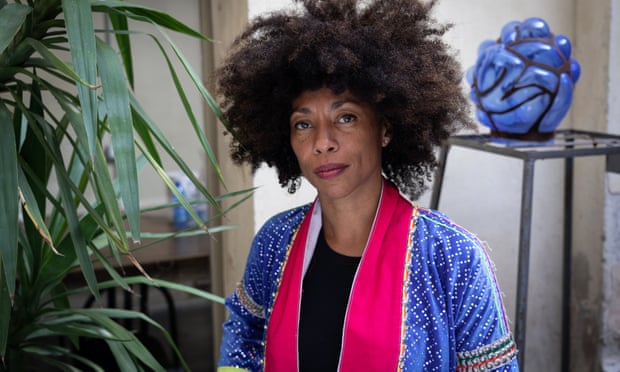
"Antonella Bundu is the lead candidate in a coalition of anti-fascist radical-left parties...
On a peaceful Monday morning in March 2018, a Senegalese street vendor named Idy Diene was murdered on the Vespucci bridge in Florence.
The man who fired the six fatal shots was an Italian pensioner who told the police he had shot randomly at the first person he encountered. He had previously attempted to take his own life.
Antonella Bundu, 49, was one of the first people to arrive at the scene. She burst into tears when she was told that under the blood-stained sheet lay Diene. She had come to know him well, watching him set up and take down his makeshift table of cigarette lighters, tissues and umbrellas.
That afternoon she took part in the protests led by the Senegalese community in Florence. Diene had become the most recent victim of a series of attacks against Africans in Italy as anti-immigrant propaganda, spread in part by the far-right leader Matteo Salvini, continued to circulated in mass media.
Since that day, the number of racially motivated attacks against migrants has risen sharply in Italy, tripling between 2017 and 2018, and Salvini has become interior minister. One year after Diene’s death, spurred on by the climate of intolerance and racism that has spread throughout the country, Bundu has decided to run for mayor of Florence. The daughter of a Florentine mother and a Sierra Leonean father, she has become the first black female candidate for mayor of a large Italian city.
She is the lead candidate in a coalition of radical-left parties including Potere al Popolo (Power to the People) and Rifondazione Comunista (Communist Refoundation). The vote will be held at the same time as the European elections on 23-26 May.
“Until a few months ago I never imagined I could take on such a role,” Bundu told the Guardian. “Then a movement tied to the left invited me to speak at the Alfieri Theatre in Florence. I was given one word on which to improvise a seven-minute speech. The word was ‘black’. Without hesitation I poured out about what was happening in Italy. I spoke about myself, my story. They must have liked my monologue, because they immediately asked me if I’d be interested in running for mayor’s office.”
Read more about her story at source here.
Saturday, April 28, 2018
"In Spain, there is a fear of talking about race"
 |
| [Photo by Maité Escarria and courtesy of Lucía Asué Mbomío Rubio. Used with permission.] |
Read more from Sandra Abd'Allah-Alvarez Ramírez' original article at Global Voices here.
Wednesday, June 10, 2015
'COLOUR' in Barcelona

The
photographic work of my friend Ibrahim Sajid is part of a
new exhibition (until June 21) at Arenas, the former bullring at
Gran
Via de les Corts Catalanes, 373- on Plaça
d'Espanya,
Barcelona.
The
concept of this international group project is stated as:
"Mankind
has come a long way, yet even in today’s modern world, our
behaviours are stereotypical.
Racism, bias and
discrimination are the social evils prevalent in all societies and
each and every one of us plays a role in either contributing to or
breaking down racial prejudice and intolerant attitudes.Our opinions are created and nurtured by superficial beliefs, making us form biases against ethnicities, cultures, religions, gender, nationalities, races and color without even trying to see beyond.
This installation urges us, as a society, to question the first impressions we form at a glance, regardless of his or her appearance, forcing us to look beyond the colour."
Friday, July 4, 2014
"I don't think,...therefore I am" - My latest article for Catalonia Today magazine

"Jews
are responsible for most of the world’s wars."
This
is "probably a true statement" according to one in four
people across the entire planet, a recent global survey has found.
It
would be easy to dismiss these kinds of stereotyped opinions as the
ill-informed ignorance of a small minority, except that nearby events
of the last few months show that discrimination and prejudice of many
kinds are seemingly much deeper and more widespread than we might
like to think.
At
a Brussels Jewish museum in May a lone gunman shot dead three people,
including two Israeli citizens on holiday. Only hours later, two Jews
were attacked and beaten in Paris as they left a suburban synagogue.
In
fact, following from another public slaying of three Jewish children
and a Rabbi in Paris in 2012, more than 1,400 Jews left France to
live in Israel in the first three months of this year, now making it
probable that 2014 will see the biggest exodus of French Jews to
Israel since that country was established in 1948.
The
results from France's municipal elections in May seem to prove that
getting out of the "land of liberty, fraternity and equality"
is a prudent decision for those minorities without that promised
equality.
The
far right National Front party there has just received it's best ever
voter support in municipal elections and actually won the European
Parliament elections with 25% of the vote.
Further
East the situation is also disturbing.
In
the Ukrainian city of Donetsk, Jews leaving their local synagogue
were handed leaflets from the new pro-Russian military that ordered
them to pay a fee and register their property. They were threatened
that failure to comply would lead to their assets being confiscated
or even deportation.
One
resident of the city said that she had never experienced
anti-Semitism until she saw the leaflet but it reminded her of when
the Nazis occupied the area in 1941. In that part of the world and
across wider Europe we know that there has been a long and terrible
history of violent "pogroms" against Jewish people.
But
it is not just religious bigotry that is increasingly finding it's
way into the light.
If
you have a dislike of homosexuality then you can be comforted by
having entire national governments that share your intolerance. Apart
from Russia's new anti-gay "propaganda" laws, in the
continent south from here homosexuality has become a criminal offence
in Burundi, South Sudan, Uganda and Nigeria.
Even
Australia's Prime Minister Tony Abbott has come up with more than 200
million dollars in new funds in a bid to push his anti-gay attitudes
into schools through so-called "emotional and spiritual support"
chaplains.
Meanwhile,
another survey has discovered that a staggering 43% of Americans
would not vote for any presidential candidate who declared them self
to be an atheist.
Just
as surprising was that 40% would also not cast their vote in favour
of a president of who happened to be a Muslim.
Equally,
the possibility of a lesbian or gay president of the "free
world" would almost certainly be blocked by the 30% of Americans
who openly admitted that they would not support their commander in
chief being of that sexual orientation.
But
where do these attitudes come from?
I
think that purely and simply they can be a result of collectively
identifying ourselves as different from others. If we are X and they
are Y, then oh, that is a relief because now I know who I am.
As
George Orwell wrote, this is "the habit of assuming that human
beings can be classified like insects," and something that I
believe is done instinctively by extremists and others who don't have
what is needed to create their own beliefs.
At
it's core, this mindset of segregation and separation tips 17th
century philosopher René Descartes celebrated phrase "I think,
therefore I am" on it's head.
Sunday, June 9, 2013
My interview with Matthew Tree - author of SNUG

Below is the text of my interview with Matthew Tree, the prolific British/Catalan writer who has just published SNUG, his first novel in English.
[A version of his article was first published in Catalonia Today magazine in June 2013.]
You've
had a very successful career over many years writing in Catalan but
this is your first published novel in English. What has caused the
delay and now the publication of SNUG?
What
mainly caused the delay was the fact that I found my written voice
first in Catalan, in 1990, when I wrote and published a small text
called 'Viatge a Romania'. As I still hadn't found my written voice
in English, I then made a more or less conscious decision to write
only in Catalan for about ten years (with the odd incursion into
English, which only went to prove that I still couldn't write in this
language). Then, in 2000, I got an idea for a full-length novel which
came to me in English and in English only. So I wrote the novel in
English, and discovered that, finally, after the years of discipline
of working in another language, I had finally broken the back of my
mother tongue. That novel, however, was published in Catalan (my
version) and in Spanish (translated by someone else from the English
original). But not in English. The idea for SNUG came to me in 2006
and was based on a host of other ideas that had been building up over
the years. I finished it in 2011. My agent, irritated with the wall
of silence she was getting from most UK publishers, decided to bring
SNUG out as a promotional, though professionally produced, edition.
Much as I like this edition, which has been beautifully done, the
idea is to use it to attract the attention of a mainstream publisher.
You are one of the few writers born in England who is brave enough to regularly write honestly about social class in that country. How important is class as a theme in your work?
Class
was the reason it took me so long to find my written voice in
English. Class is built in to British English, as far as I can see.
The stratification that English society is still in the grip of,
reaches right into the language: open a book by almost any English
writer and the vocabulary and syntax will immediately indicate the
social class of either the writer or the narrating voice. I wanted an
English that was fully malleable, fluid, unconditioned, like American
English. And when I got it - or I hope I did! - I used it to talk
about class, but directly, not 'unconsciously'. They say writers
should write about what they know. Like everybody raised in England,
I know about class. It's affected me all my life, and I suspect it's
a lot more important - reveals a lot more about the nature of people
in general - than is usually supposed.
Why did you set SNUG in a small town on an island in England?
Because
I wanted the African visitors in the book to come across England at
its most complacent and cosy and snug. I got the idea for the novel
when on holiday in the Isle of Wight, which is the kind of place that
feels like nothing is ever, ever going to happen there. Perfect.
One of the three main characters in SNUG is what could be called an "intelligent racist." He's a quick-witted man but his blind-spot is that he is instinctively prejudiced. Did you base his personality on a particular "type" of person?
The
interesting thing about racism is that, despite its irrational,
acientific (or pseudoscientific) nature, it is often espoused by
highly intelligent and well-informed people. Who are not intelligent
enough, however, to realise that they are gift-wrapping their
intelligence around outmoded and patently absurd prejudices in order
to justify them. Dr Whitebone in SNUG is that kind of 'intelligent'
racist. Smart, but not really smart. Christ knows there's
enough of them around.
This same character in the novel says that "providence has provided me" as the solution to the crisis in the town. Do you think that this delusion is a typical one of religious zealots?
No.
For what it's worth, I suspect that religious zealots are weak-minded
people who love to feel that they are subjected or even enslaved by
their beliefs and therefore do not have to answer for anything those
beliefs impel them to do. Dr Whitebone's sense of providence is more
like that believed in by many political leaders, of the left or
right: they think they're the man or woman of the moment, and can
help the benighted populace, even if this means some sacrifices being
made by that same populace.
The anti-Semitism in your novel is particularly well shown-up. How much of a problem do you think this still is, in the UK and Europe?
You'd
have thought that after the Shoah, anti-Semitism would have gone the
way of the dodo bird, but certain far left European intellectuals,
especially in France, revived it in a new form in the late 60s and
early 70s - as 'anti-Zionism' - and it has since spread from there.
In the Arab world, where it was imported directly from Nazi Germany
through Haj Amin al-Husseini (the founder of modern Palestinian
nationalism, and one of Yasser Arafat's mentors) it is especially
virulent. But it should maybe be remembered that Zionism - not to be
confused with religious Zionism - is simply the belief that the
Israeli state has a right to exist. Anti-Zionists, then, presumably
want it to be eliminated (Hamas are genuinely anti-Zionist in this
sense). It's a complicated issue, as there is no question that the
Israeli state deserves severe criticism for its continued occupation
of Palestine (the parts of Palestine that used to belong to Jordan,
to be precise). But many people use that as a starting point for
encouraging anti-Jewish hatred around the world, which is just
absurd. As we hold this interview, news has come through that the
Syrian government has just killed 50 Turkish people in a bomb attack.
Compare the fairly muted international outcry now with when the
Israeli military killed nine Turkish nationals on a boat headed for
Gaza, a few years ago. Why this difference in virulence?
Anti-Semitism, unfortunately, is still very much with us, on both the
left and right, but gives itself sneaky political justification in
the form of the undeniably legitimate Palestinian struggle for
independence (support for this struggle, of course, doesn't
automatically imply an anti-Semitic stance: you have to read between
the lines to see where people are really coming from, in this sense).
In the West, it seems, then, that anti-Semitism is hard-wired into
the belief system, perhaps because it was, indeed, a Christian
invention.
Another of the three main characters is 12 years old. What did you do to create the mind of this character?
I
thought about when I was twelve. A lot of the larking about between
the narrator and the other young teenagers is based on a holiday I
went on in East Anglia - when I was twelve.
The other narrator of the story is an African man who is directly involved in creating the conflict on the island. At one point he uses a popular British hymn to cleverly satirise the locals. What was your idea behind this?
In
fact, the use of William Blake's 'Jerusalem' - which Jonas Cole, the
African spy, overhears and 'adapts' as he listens to it - is a bit of
a cliché, in that it's appeared in a couple of films I can't
identify at the moment (I vaguely remember people singing the hymn in
church, cut with images of other people being beaten up by British
soldiers or police). But 'Jerusalem' does sum up perfectly a kind of
exalted self-satisfaction you often find in England, and which the
visiting Africans, of course, disturb somewhat.
What influenced you to write SNUG and have you read any other books that also skillfully explore colonialism?
For
about 20 years I'd worked on different ideas for a novel based on a
siege: but I never got either the besiegers or the besieged 'right':
the situations i invented just didn't work at all. Then there I was,
in 2006, on the Isle of Wight, when I suddenly remembered a story I
wrote when I was 20, in which thousands of Africans come to
Thatcher's England, furious with the way their continent is being
treated and the bullshit they have to put with. Bingo: I realised a
Wight coastal village would be the besieged entity, and the
besiegers, Africans. As for reading, I read anything I could get my
hands on about Africa: history, African fiction, including Chinua
Achebe's 'Things Fall Apart', perhaps the greatest anti-colonial
novel of them all. For SNUG, I went to Tanzania and was lucky enough
to meet a major Swahili language writer, Erick Shigongo, who put
things into a much-needed non-European perspective.
What are you working on currently as your next book for publication?
I'm
working on a new novel in English, which could be summarised in three
words: 'England as sect'.
What
are your thoughts about the current political situation in Catalonia?
My
personal sense is that we are at a historical moment that started on
the 11th of September, 2012. The outcome is uncertain but whatever
happens, it will mean that Spain will no longer be as most people
seem to think it is. It seems that the home-rule process is
accelerating, not least because the Spanish government is doing
it's best to make Catalans feel like aliens inside Spain.
Subscribe to:
Posts (Atom)