Showing posts with label Spain. Show all posts
Showing posts with label Spain. Show all posts
Wednesday, October 4, 2023


Saturday, September 16, 2023
Monday, September 4, 2023
Video: "Sign Language" by [Catalonia's] Macaco - 'Lenguas de Signos ft. Monsieur Periné'
Saturday, August 5, 2023
Yet another ⭐⭐⭐⭐ reader review of my latest book

"I found Brett's very personal account of his travels through Spain a moving and very rewarding read.
His affection for the country and its peoples shines through and his encounters with the people he meets on his travels avoid caricature and shallow conclusions.
He is clearly still discovering aspects of the country he loves and enjoying the opportunity to complete the picture."
[Read the full Amazon reader review here.]
Saturday, July 8, 2023
Video: Launching my book "Slow Travels in Unsung Spain" in Barcelona
Reading two short extracts and doing a Q and A session with an audience at Fahrenheit 451, an independent bookshop in Barcelona.
Gary Gibson from Blanquerna Ramon Llull University kindly introduced me.
Sunday, June 25, 2023

Sunday, June 18, 2023
Launch of my latest book (in Barcelona)

I'm happy to say I'll be launching my non-fiction book,
"Slow Travels in Unsung Spain" at this unique independent bookshop:
Fahrenheit 451
(C/- de la Ribera, 8, [El Born] BARCELONA
[Metro: Barceloneta]
Friday, 3Oth June, 7.00-8.00PM.
We'd love to see you there!
(Look inside the book here: https://www.amazon.com/dp/B07NJG91W7/ )
Thursday, June 15, 2023
A coincidence?
On the same day that the neighbouring region's new ultra right culture Minister is installed,...at a cafe in a coastal town in Catalonia a Black man is refused service by a waiter who racially insults him.
Sunday, June 11, 2023
Anaïs Nin started her famous diary in Barcelona?

"In Barcelona I didn't have the impression that the absence of my father was definitive. I thought it could come at any moment. We saw his family, his parents, his grandmother...It was his homeland...".
A blog (in Catalan) on the childhood of the great writer in Barcelona.
Wednesday, May 24, 2023
"Spain Welcomes Springtime With ‘Maya’ Girls"
"The festivity of the Maya comes from pagan rites and dates from the medieval age, appearing in ancient documents. It takes place every year in the beginning of May and celebrates the beginning of the spring.
Girls between 7 and 11 years old are chosen as “Maya” and should sit still, serious and quiet for a couple of hours in altars on the street decorated with flowers and plants and afterwards they walk to the church with their family where they attend a ceremony.
(All photos by Daniel Ochoa de Olza/AP Photo)" Source here.

 ad
ad
 ad
ad
Saturday, May 6, 2023
Let them read

The Second Spanish Republic led pedagogical missions to 7,000 towns and villages, creating 5,522 libraries with more than 600,000 books.
Sunday, March 26, 2023

Sunday, March 19, 2023
"Transforming broken skateboards into drinkable water:" Barcelona meets Africa
Video focusing on the volunteer work of John French, an Australian artist (and friend of mine) living in Barcelona. MOSS, the skating group organisation he leads is helping to create new water resources for townspeople in Swaziland/Eswatini, Africa.
Wednesday, March 8, 2023
"The women ham carvers of Spain" – #InternationalWomensDay
 |
| [Raquel Acosta is one of Spain's most high-profile carvers (Credit: Josu Acosta)] |
"Carving legs of Iberian ham in bars, restaurants and at events has traditionally been a man's job. Now, a new generation of women is taking their place at the slicing table."
(From personal experience, I can say this carving is very difficult to do...)
Jill Petzinger's article for BBC Travel here.
Tuesday, February 28, 2023
"Top 10 neglected books about the Spanish Civil War"

The Guardian recently published an article by Sarah Watling with [arguably] lesser-known books about the Spanish Civil War that are available in English.
Literary Rambles blog recommends the ones by Rukeyser, Cercas, Laforet and Rodoreda.
Friday, February 24, 2023
"Why Read Homage to Catalonia By George Orwell? A Short Review"
Rightly describing George Orwell as "one of the great commentators of his own era." Personally, I'd go further and say of any era in the English language.
Orwell had an ability to get to the visceral in a way that few have. Shakespeare regularly did. James Baldwin also did.
Sunday, February 19, 2023

Tuesday, February 14, 2023
"Grabbing Granados" – My latest article for Catalonia Today magazine
[This article* was first published in Catalonia Today magazine, Feb. 2023.]

A huge boat is sinking in The English Channel. A man is clinging on to the side of a tiny raft, only big enough for one woman to kneel on. Soon, both drown in sight of other passengers.
According to witness Daniel Sargent, this is what happened to Catalan composer and pianist Enric Granados i Campiña and his wife Amparo Gal, who was too heavy to get into a lifeboat. Granados apparently refused to leave her alone in the sea and tragically on March 24, 1916 their six children became orphans.
In this ill-fated transatlantic crossing, returning from a tour, the boat they’d been on (the French-flagged Sussex) was mistaken for an enemy minelayer craft and torpedoed and sunk by the Germans. Only days earlier Granados had been playing piano in the White House for US President Woodrow Wilson.
Born in Lleida in 1867 and the son of a colonel (originally from Spanish Cuba) and a Galician mother, at the age of 10 he began to study music and gave public concerts in his hometown (though his first major recital was in 1890, when he was 23 years old.) Still a child, he moved to Barcelona and was enrolled at the Escolania de la Merced.
As is so often the case though with historical figures, myths and disagreement surround important areas of Granados’ life. The financial impact of his father’s premature death at just 57 is unclear but it seems likely that his mother received the correct widow’s military pension and kept the wolves from the door in this way.
What is known is that Enric got a job playing piano for five hours a day at the Café de las Delicias, but around the time he moved his ivory tinkling gig to the Café Filipino, the Catalan impresario Eduardo Condé was also funding him to a very pretty tune as music teacher of his children.
In fact, many of the best Catalan pianists of recent times came out of the music academy in Barcelona that bore Granados’ name. The institution became a centre for a theoretical-practical method for piano pedals that Granados had developed from the teachings he’d held onto from living in Paris two years before.
His masterpiece as a composer is the suite for piano “Goyescas” (1912-14) inspired by works of the Spanish painter Francisco de Goya. Partially first performed at the Metropolitan Opera House in New York, it helped lead to his White House triumph. Despite these kinds of success, Granados went on to suffer from extreme stage fright later in his performing life, according to one source, even begging that he not be forced to play.
I wanted to know more about this man with the fruity name, his name having been given to one of my favourite streets in the Catalan capital. With only one slow lane of traffic, it’s a gently sloping oasis of near-calm and almost-quiet when all around is everything but that, lined with superb restaurants and quaint little speciality shops or delis at both ends.
I grab any opportunity to walk up or down this street. Sometimes I go out of my way to be on it, a part of it, while I think about the man too these days.
[*Most likely this will be my final piece for Catalonia Today magazine. Apparently for economic reasons, it has been cut in half: down to just 32 pages. This means independent journalists who are not directly employed have been also cut. I wrote for them between 2008 – 2023 and would like to thanks all those involved in the production of the publication.]
Saturday, February 4, 2023
"High power prices taking extra toll on sick Spaniards"
 |
| [Pic: Reuters: Nacho Doce] |
"Nearly 4 per cent of Spanish households in the fourth income decile — a segment typically viewed as middle class — have spent more than half of their income on energy since the rise in prices last year, an Oxfam survey has found."
Read more from ABC (Australia) here.
Saturday, December 24, 2022
"Promenade of Desire" – My latest review for Catalonia Today magazine
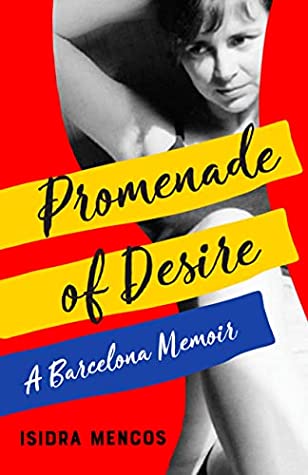
[This article was first published in Catalonia Today magazine, Dec. 2022 under the title “Promenade of multitudes”]
A really good book is a universe away from its marketing.
One vibrant new piece of nonfiction, “Promenade of Desire, A Barcelona Memoir” is being promoted as “a sensual coming of age story: From Catholic virgin to Mata Hari as Spain moves from dictatorship to democracy.”
All true enough, but as well as getting a grip on the massive changes in Barcelona from the 1960s until just after the Olympic games in the early 1990s, the author Isidra Mencos charts a deeply internal arc.
Apart from the apparent honesty, what I like most about this raw account of an individualist’s first few three decades is the richness of self-discovery it contains.
The author’s sexual desire is undeniable but so is her lust for experience itself.
With an equally powerful bravery, she plunges into a subculture of horny squatters, for a while, finding herself most at home with the homeless.
We also witness other improvised or adapting versions of her: as an uncertain teenager and then young adult, still racked with a punishing guilt.
Born to an affluent, emotionally-cold lawyer family (from the city’s high up Sant Gervasi-Bonanova area) who slowly fell on hard economic times, Mencos tellingly relates how her closest childhood at home was with their housekeeper/childminder/cook.
Quica, a semi-literate Andalusian woman who’d lost a husband and ten of her fourteen children during their infancy, was an anchor for the inquisitive young girl even during night-time bad dreams.
Mencos’ pure affection for this kind of person (who makes it possible for the rich to live like the rich) is touching.
It’s a clear sign that she transcended at least a snobbery of neglect. The words, ”I bawled at her death as I had not done for my lost grandparents,” poignantly ends one section in the book.
Looking at wider themes, identity is a major one. The author puts herself in the category of a “good girl,” even a “girlie girl” with “a quiet demeanor that dissolved with the ice cubes at the bottom of [her] second drink. Out came a fearless woman who declared her literary opinions with confidence and subjugated a man with a swing of her hips.”
In fact, alcohol became a major problem for her and some of the men who were her live-in lovers. Violence and abuse followed.
The details are harrowing but also somehow instructive and a kind of balance comes in the shape of a new half-American half-Japanese female friend. “A role model for me because I still lived at half speed, with a split personality,” writes Mencos.
As Barcelona remodeled and replenished itself for the 1982 Olympics, the author herself was doing something similar as a part-time translator of articles for the official games committee. Then she set a routine for passing TOEFL and SAT exams so she could do a PhD in the USA.
Ultimately, she is healed: by herself, by quality therapies, probably too by discovering a genuine, transporting passion for the “unique vocabulary and no fears, no confusion” of salsa music and dance.
Here, we see a Barcelona that would’ve even been foreign to many locals, an immigrant/latin underworld of afflicted aficionados and slaves to a beat that was new to these European shores.
One of the great qualities in this book is that we also see a person who is now unafraid of so much she had been.
Subscribe to:
Posts (Atom)