Friday, January 6, 2023

"Running dry – Protecting the right to water in Europe"


[Greenwich Park parched by the heat and lack of rain on 12 August 2022. Photo by Alisdare Hickson. Source: Wikimedia Commons.]

"Water privatization has catastrophic results, as shown by France and the United Kingdom. Citizens across Europe are increasingly opposed to the liberalization of essential services. But with climate change worsening droughts and heatwaves, public ownership is only the first step towards just and effective water management.


European policy has traditionally treated water as an abundant commodity to be extracted for profit. The severe droughts recently experienced in Europe indicate that this era of abundance is over and have brought home the true value of water as a precious and scarce resource. It is time to look at water in a new light.

This new situation requires a radical change in our approach to water policy and management. Former attempts to integrate water resources into the European single market now appear short-sighted at best and potentially disastrous. In order to build the resilience necessary to overcome the climate-related challenges ahead, we can no longer allow water to be exploited by market forces for private gain. The neoliberal water policies in place in many European countries need to be reversed, and water must be subject to public or commons-based governance. Only in this way can we build resilient water systems and keep water universally available and affordable.

Privatization and resistance

The current era of water privatization first began to emerge in the 1980s when, under the conservative rule of Margaret Thatcher, the UK government oversaw the transformation of water facilities into private assets. Water was privatized in England and Wales in 1989 as part of a wider liberalization agenda for public services and resources. Ten regional water authorities and their proprietary infrastructure were completely transferred to privately owned companies. As a result, water companies became ‘permanent regulated monopolies’, facing ‘public sector levels of competition and risk’ with ‘private sector levels of profit and return’.1

The result was a complete collapse in investment in water infrastructure with serious consequences for water losses. Private company Thames Water, which provides water to the London metropolitan area, has been criticized for its inability to deal with huge leaks from its pipes. The estimated water loss is 600 million litres per day – almost a quarter of all the water it supplies. This quickly becomes a severe problem in the context of drought-induced water scarcity. Thames Water and Southern Water, another large water and wastewater company, have also been criticized for unacceptable levels of sewage pollution and spills, which seriously affect both valuable ecosystems and public health."

Read more (especially about Italy and remunicipalisation of water in France) from source at Eurozine here.


Wednesday, January 4, 2023

Yanis Varoufakis: Crisis, Recession, the Left & the state of the world economy


"Yanis Varoufakis is an economist, professor and left-wing Greek politician. Yanis has taught at several universities in Britain, Australia, Greece, and the United States.

He became the finance minister of Greece in 2015, when the coalition of Radical left- Progressive alliance came to power. In March 2018, he founded MeRA25, the "electoral wing" of DiEM25 in Greece.

In the 2019 legislative election, MeRA25 was the sixth most voted-for party, amassing nine parliamentary seats, with Yanis himself returning to the Hellenic Parliament. He is currently serving as a Member of Parliament in Greece.

Sunday, January 1, 2023

Safia El Aaddam’s “Immigrants’ daughter” (2022)


"Lunja is brave. A warrior. Born in a small Catalan village, of Amazigh origin, an indigenous [group] of North Africa, from childhood she confronts racism, poverty,...sometimes even her own culture." 

With this YA novel, the author puts mental health on the table and how it gets worse due to being an immigrants’ daughter and racialized as of African origin."

First found at Literary Rambles.


Saturday, December 24, 2022

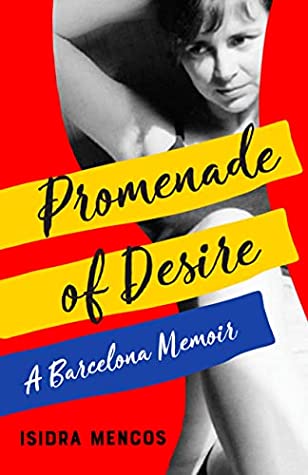
"Promenade of Desire" – My latest review for Catalonia Today magazine


[This article was first published in Catalonia Today magazine, Dec. 2022 under the title “Promenade of multitudes”]


A really good book is a universe away from its marketing.

One vibrant new piece of nonfiction, “Promenade of Desire, A Barcelona Memoir” is being promoted as “a sensual coming of age story: From Catholic virgin to Mata Hari as Spain moves from dictatorship to democracy.”

All true enough, but as well as getting a grip on the massive changes in Barcelona from the 1960s until just after the Olympic games in the early 1990s, the author Isidra Mencos charts a deeply internal arc.

Apart from the apparent honesty, what I like most about this raw account of an individualist’s first few three decades is the richness of self-discovery it contains.

The author’s sexual desire is undeniable but so is her lust for experience itself.

With an equally powerful bravery, she plunges into a subculture of horny squatters, for a while, finding herself most at home with the homeless.

We also witness other improvised or adapting versions of her: as an uncertain teenager and then young adult, still racked with a punishing guilt.  

Born to an affluent, emotionally-cold lawyer family (from the city’s high up Sant Gervasi-Bonanova area) who slowly fell on hard economic times, Mencos tellingly relates how her closest childhood at home was with their housekeeper/childminder/cook.

Quica, a semi-literate Andalusian woman who’d lost a husband and ten of her fourteen children during their infancy, was an anchor for the inquisitive young girl even during night-time bad dreams.

Mencos’ pure affection for this kind of person (who makes it possible for the rich to live like the rich) is touching.

It’s a clear sign that she transcended at least a snobbery of neglect. The words, ”I bawled at her death as I had not done for my lost grandparents,” poignantly ends one section in the book.

Looking at wider themes, identity is a major one. The author puts herself in the category of a “good girl,” even a “girlie girl” with “a quiet demeanor that dissolved with the ice cubes at the bottom of [her] second drink. Out came a fearless woman who declared her literary opinions with confidence and subjugated a man with a swing of her hips.” 

In fact, alcohol became a major problem for her and some of the men who were her live-in lovers. Violence and abuse followed.

The details are harrowing but also somehow instructive and a kind of balance comes in the shape of a new half-American half-Japanese female friend. “A role model for me because I still lived at half speed, with a split personality,” writes Mencos.

As Barcelona remodeled and replenished itself for the 1982 Olympics, the author herself was doing something similar as a part-time translator of articles for the official games committee. Then she set a routine for passing TOEFL and SAT exams so she could do a PhD in the USA.

Ultimately, she is healed: by herself, by quality therapies, probably too by discovering a genuine, transporting passion for the “unique vocabulary and no fears, no confusion” of salsa music and dance.

Here, we see a Barcelona that would’ve even been foreign to many locals, an immigrant/latin underworld of afflicted aficionados and slaves to a beat that was new to these European shores.

One of the great qualities in this book is that we also see a person who is now unafraid of so much she had been. 


Thursday, December 22, 2022

Orwell's Barcelona, December 1936 (& who really are the "wealth creators") [Reposted]

Standing in a Spanish Doorway: Orwell's Barcelona, December 1936 (& who really ar...: It was at a moment in Barcelona, of this same time, late in December 1936, that George Orwell chose to open his exceptional book “Homage to Catalonia.”

In the first page of chapter one, he describes how the city seemed to him then…


“The Anarchists were still in virtual control of Catalonia and the revolution was still in full swing. To anyone who had been there since the beginning it probably seemed even in December or January that the revolutionary period was ending; but when one came straight from England the aspect of Barcelona was something startling and overwhelming. It was the first time that I had ever been in a town where the working class was in the saddle. Practically every building of any size had been seized by the workers and was draped with red flags or with the red and black flag of the Anarchists; every wall was scrawled with the hammer and sickle and with the initials of the revolutionary parties; almost every church had been gutted and its images burnt. Churches here and there were being systematically demolished by gangs of workmen. Every shop and cafe had an inscription saying that it had been collectivized; even the bootblacks had been collectivized and their boxes painted red and black. Waiters and shop-walkers looked you in the face and treated you as an equal. Servile and even ceremonial forms of speech had temporarily disappeared. Nobody said 'Senior' or 'Don' or even 'Usted'; everyone called everyone else 'Comrade' and 'Thou', and said 'Salud!' instead of 'Buenos dias'. 

Tipping was forbidden by law; almost my first experience was receiving a lecture from a hotel manager for trying to tip a lift-boy. There were no private motor-cars, they had all been commandeered, and all the trams and taxis and much of the other transport were painted red and black. The revolutionary posters were everywhere, flaming from the walls in clean reds and blues that made the few remaining advertisements look like daubs of mud. Down the Ramblas, the wide central artery of the town where crowds of people streamed constantly to and fro, the loudspeakers were bellowing revolutionary songs all day and far into the night. And it was the aspect of the crowds that was the queerest thing of all. In outward appearance it was a town in which the wealthy classes had practically ceased to exist. Except for a small number of women and foreigners there were no 'well-dressed' people at all.
 
Practically everyone wore rough working-class clothes, or blue overalls, or some variant of the militia uniform. All this was queer and moving. There was much in it that I did not understand, in some ways I did not even like it, but I recognized it immediately as a state of affairs worth fighting for. Also I believed that things were as they appeared, that this was really a workers' State and that the entire bourgeoisie had either fled, been killed, or voluntarily come over to the workers' side; I did not realize that great numbers of well-to-do bourgeois were simply lying low and disguising themselves as proletarians for the time being.”


So, Orwell thought that not only could Socialism work but it that it was already working in Barcelona during that time, however brief.

In Orwell's earlier life he had argued that wealthy Britain was only able to exist thanks to coal miners working themselves to early deaths in underground infernos. They were the true creators of that nation’s wealth.

As William Blake outlined, the entire modern world is "underwritten by constant, speechless suffering and that "culture" begins in the callused hands of exhausted children," [to quote historian, Robert Hughes.]

It all reminds me of a line in a song by another Australian expat, NickCave:

"Out of sorrow, entire worlds have been built."

Sunday, December 18, 2022

Come and get your match-box apartment

"EPE reports that Spain’s first ‘micro-casas’ are now available for rental. The 847 abodes, (500 of them are just twenty-five square metres) are in a macro-complex in an industrial area of Madrid about an hour from the city-centre and start at 788€ per month. The residence, run by the US Greystar Management (here), also offers common facilities, such as a yoga-room, a gym and a laundry. With video. " 


This story first found on excellent news service BoT

Sunday, December 11, 2022

An ugly truth


"The Banco de España confirms that company profits grew seven times more than wages in 2022.

The institution says that companies have transferred the increase in costs to sales prices and have improved or maintained their profitability during the current period of high inflation."

Found at BoT : a great summary of Iberia's news.

(Original source at ElDiario here.)

Tuesday, December 6, 2022

"The skin of a bull" by Salvador Espriu (my updated translation*)


Sometimes it is necessary, essential
that a man dies for a people
But an entire people must never die
for a single man:
Remember this, Sepharad.

Make sure to keep the bridges of dialogue safe
and try to understand and love
the different reasonings and tongues of all your children.
Drop by drop, let the rain fall on the seedlings
and the air cross the wide fields
like a generous extended hand.

May Sepharad live forever
through order and peace
In work and in hard-won
liberty.


"La pell de brau" by Salvador Espriu (1913 - 1985)

*Thanks to Antoni Cardona for co-translating.


Sunday, December 4, 2022

Rewards for you

Doctors across most of Spain are on strike (Madrid) or planning strikes (Catalonia included: 25,26 january) 

They are protesting the continuation of government under-funding, salary freezes, creeping privatisation and the countless hours of over-work that this neglect creates for them and all public hospital staff.

This is how we as a society are really saying thank you to them for risking their health and lives since the Covid pandemic started 3 years ago this month.

Sunday, November 27, 2022

“Ugly Spain” – a book that provokes


"Why doesn’t the 1978 Constitution of Spain include the word “landscape”? 

Why doesn’t a Coastline Conservatory such as the French one exist in Spain? 

Why were more than 1,000 beautiful villages catalogued in 1967 in Spain, and now there are barely 100 are left? 

Why have democracy and the system of Autonomous Regions been seriously harmful to the landscape, and as a consequence, ruined in an irreparable manner the collective imagination?

España fea is a brillant study of the atrocities committed against the Spanish heritage from the end of the Franco dictatorship to today. 

With rigour and sensitivity it gives a detailed overview of all the absurdities undertaken on the Mediterranean coasts [from] the North, passing through “emptied Spain” and Madrid’s urban-planning disaster, and it analyses the causes that led to this cultural catastrophe. 

It reveals the strategy invented by ignorant and corrupt politicians and developers, with the complicit silence of a demobilized guild, that of architects, plus the indifference and ignorance of the intellectuals and the media. 

Nevertheless, the book also analyzes in detail some examples of a work well done, connecting with the best European tradition, in cities such as Barcelona or Santiago de Compostela, or in villages such as Albarracín or Vejer de la Frontera.

Starting from numerous interviews and uniting the journalistic chronicle, travel book and political essay, Andrés Rubio presents a truly original text full of nuances. Analyzing also the cases of France, Germany and Italy, it carries a Europeanist and progressive message in defense of the best qualities of the public, advocating for land-use planning as an essential weapon to affirm democracy."

Publisher's summary above found at Literary Rambles.

Sunday, November 20, 2022

"Europe’s best countries to drive in"

"Switzerland is Europe’s best country to drive in, new research has revealed.

Spain comes in seventh place, with 627 cars per 1,000 people, low road traffic deaths with 3.15 per 100,000 people and a good road quality with a score of 5.7 all adding up to a driving score of 76.36 out of 100.


The study by the International Drivers Association analysed several factors surrounding driving in Europe and scored 33 countries based on how congested the roads are, the quality of the roads, petrol prices, and how safe driving is.

It found that Switzerland is the best European country to drive in, with the country scoring highest on the list for its safety, with only 1.71 road traffic deaths per 100,000 people..."


Tuesday, November 15, 2022

History under foot


​


"Here lived Damia Aleixendri Curto, born 1909, exiled, deported 1941, Mauthausen, assassinated, 25.3.1942." 

(My photo of a plaque I found in a street pavement in Vilafranca del Penedes, Barcelona prov. 2022.)


More details here (in Catalan:) https://banc.memoria.gencat.cat/ca/results/deportats/1575

Saturday, November 12, 2022

"Greater than skaters" -- My latest article for Catalonia Today magazine


​A presentation at the design studio Casa de Carlota for creatives with special needs.

Climate change, habitat destruction, loss of biodiversity, ocean plastics, food insecurity and the list goes on. What can one person do? 

That’s a question that John French has been asking himself for nearly four decades.

He moved to Spain over 10 years ago and says he has found an answer that came from a most unlikely place. John is an artist and teacher now based in Catalonia. He lives with his wife and two children in the Poblenou neighbourhood of Barcelona, which he calls “the street skating capital of the world.” He is coordinator of MOSS Foundation BCN and a board member of MOSS Foundation Australia.

John grew up in the 1970s in the eastern suburbs of Melbourne, Australia’s second largest city. About 15 years ago, a group of skaters who are now in their 40s and 50s (but still skateboarding) would meet every week to ride the city’s new skateparks. It became known as MOSS or Melbourne Old School Skate Sessions. They had a water project in Africa and would use any money they made from events, competitions or t-shirt sales to build installations to collect rainwater for rural communities in Swaziland, now known as Eswatini.

MOSS is a completely volunteer organisation: no one gets paid and there are no overheads, no office or admin costs and 100% goes to the cause. It connects one community – that of skaters – with communities in developing countries by heeding their calls for support. MOSS works to meet their basic need for safe drinking water by using the talent and imagination of artists in Australia, Spain and beyond. By pulling these strands together, MOSS has funded over 25 water projects.

John says: “Every few months I visit the local skate shops and collect old decks [the plank-like part that the skaters stand on] no matter how trashed they are. I cycle home with 10 or so boards strapped to my bike rack and they are stored and recycled at the Instituto Barri Besos high school near La Mina in Barcelona. The school director Oscar Tarrega has been fantastically supportive. I have also encountered wonderful people like Wagner Gallo Rodrigues from Al Carrer skate shop who escaped gang culture in his native Brazil through skateboarding and managed to make it to Europe. He feels so indebted to skating that he is keen to put something back. He helps out preparing boards for the artists. Sara Millan also plays an important role liaising with the artists and delivering the decks.”

The process is this: the old skateboard decks that would otherwise go to landfill get restored in the school’s woodwork room. Usually the decks are so trashed that they are covered with a canvas – this material is also recycled from the folding sun shades from the city’s café terraces – then, once covered, or sanded, the decks are primed with gesso, labelled and ready for the artists to use.

After the first BCN show last year at Urban Addict, things are now set for a larger event opening on November 25 at Barcelona street art gallery, Base Elements, in the Gothic Quarter. Despite the 12 hour time difference, the Barcelona show will coincide with the Melbourne exhibition with decks specially created by 150 international artists to be sold online using an app. Once the bidding starts it then takes part all around the world. Some decks will sell for as low as 90 euros while those crafted by more established names can sell for thousands of dollars.

A UN report listed MOSS as the principal organisation supporting people in Swaziland in their struggle to adapt to the climate crisis. “So,” John says, “it seems that we’re doing something right and that in itself is empowering.”

MOSS are on Facebook, Instagram and Linkedin @mossfoundationaskaters. They respond to all enquiries.

(This article was first published in Catalonia Today magazine (Nov. 2022) and was co-authored with John French.)

Sunday, November 6, 2022

Video: "Chaos in the UK! with Yanis Varoufakis..."


"Rishi Sunak has taken over as British PM, the richest-ever person to hold the job. He’s already promising austerity for the poorest, with public services like the NHS in danger as never before.
Sunak’s appointment comes after the disastrous Liz Truss (who was outlasted by a lettuce at 44 days), and the scandal-ridden premiership of Boris Johnson. What can British people – and those around Europe – expect from this latest (unelected) Tory government? And with a Labour Party incapable of representing common people, should progressives be adding to calls for early elections? "

Sunday, October 30, 2022

"Ana Gutiérrez, a forgotten resistance hero"


My friend, the wonderful British writer and journalist David Baird shared his knowledge of the maquis in the 
Frigiliana area of Malaga province (where he has lived since the 1970s) to help with this radio documentary.


From the source:

"The protagonists of history do not always appear in textbooks. Some have joined the ranks of those who anonymously give the best of themselves to change the course of life. This is the case of Ana Gutiérrez, "la Tangerina," tireless fighter for freedom in the darkest of the Francoist night.


RNE [Spain's Radio National] explores her eventful life and her whose determination in the defense of her ideals, like something out of a movie script.

Born in Tangier, Ana Gutiérrez was already a member of the Unified Socialist Youth before she came of age as an adult. For this she was arrested and paid for it with two years in prison and exile.

Forced to leave her hometown, she took refuge in Malaga, where she continued her militancy and took on more risky assignments, including spying and propagandist. Another two years in prison were the price to pay for her insistence on maintaining her struggle.

After being freed, Tangerina returned to the underground, this time as a supporter of the maquis settled in the mountains of the Axarquia in Malaga. There she also experienced a romance with Roberto, the legendary leader of the anti-Francoist guerrillas. For her it meant again two years in jail; but for Roberto, the [execution] wall.

After leaving prison, Ana Gutiérrez, still young, decided to rebuild her life, went into exile in Switzerland, got married and started a family. 

She lived there until, after her retirement, she returned to Spain and went to live in Nerja, in a house whose terrace overlooks the mountains where she risked her life for her ideals.

This documentary, with the agreement of Ricardo Aguilera, has had the invaluable collaboration of Salvador Magaz, son of Ana Gutiérrez, who has preserved a valuable body of documentation, key to the development of our work, and which is already the object of desire of historians. 

We are also accompanied by José María Azuaga, professor and researcher of the anti-Francoist guerrilla. 

In addition, we have counted with neighbors in the area and experts in the history of the maquis, as Adolfo Moyano or the British journalist and writer David Baird, both based in Frigiliana, who expand our knowledge about the guerrilla and its international context. 

The writer Mariví Ledesma, author of "La memoria olvidada" (Forgotten Memory), explains the harshness of those years. Vicky Fernández, neighbor of El Acebuchal, one of the villages that suffered the most repression during the war against the Maquis, gives us her testimony, as well as other elders of the area such as José Ávila, from Cómpeta, and Sebastián Martín, from Frigiliana, who keep a vivid memory of all that.

Thanks to all of them we have been able to recreate the circumstances in which Ana Gutiérrez, the Tangerina, wrote her story of courage and dedication that does not appear in any book."

Saturday, October 29, 2022

Sunday, October 23, 2022

"Early doors day" -- A poem

 (This poem was first published in Burrow here at Old Water Rat’s Publishing )


soft lines of fog trees

not the desert
but quiet like the desert

we look at the stars to see 
what we come from

body not yet the enemy
light slowly befriends you

Monday, October 17, 2022

"It has now come to this" -- My latest opinion column for Catalonia Today magazine


Cars and vans parked in a street. QUIM PUIG.

[This article was first published in Catalonia Today magazine, Oct. 2022.]


The following is based on current and factual information…

How would you fancy sleeping in a car or a van?

Rather than the now antiquated 20th century idea of having your own bed in something as outdated as a house, for the price of two euros a day our new business in Barcelona will fulfill this fantasy for you. And for only 60 euros a month on a prime real-estate public street!

Naturally, there are those in the city council who want to curb your right to get your shut-eye shut out of buildings but they just don’t understand an adventurous spirit. Don’t let them tell you what to do and where you can and can’t do it. You work hard every day and you deserve what we call a “micro space” to match your macro dreams.

We are opening in a small, quiet and almost-deserted square in the Sant Andreu district. In the same location you can rub shoulders with customers of our beehive flats. On top of all that, for a mere 90 euros per month you can go inside, hang out on a plastic chair for the entire day, have a shower, store food, use the complimentary microwave, or even wash your clothes. Now that’s what we call livin’, baby!

Yes, it’s true that those small-minded lefty bureaucrats in the council have assured everybody that our operation won’t actually be legal but in the meantime you can make us your home. We’ve traded in the semi-legal shadows for years so we’re at home with that, even if you’re not!

OK, it’s not exactly what most people call home and it’s temporary but let’s not quibble about semantics. You need a mattress and we can rent you one. That’s just free-market capitalism in operation and who should stand in the way of your good night’s sleep. So, wind up the windows, click the locks on the doors and snuggle up for sweet dreams!

Oh, and another thing that you don’t need to concern yourself with. We admit that municipal tow trucks have already taken some of the sleeper vehicles away but this is just a minor inconvenience. In the unlikely event we are discriminated against again in this way, we’ll refund half of your fee and find you another vehicle to nod off in. You can’t say fairer than that, can you?

As for our premium accommodation we even have a waiting list for others to live in homes that are no bigger than three square metres. We acknowledge that at the moment those are also prohibited in Barcelona but they’ve got them in Japan and “anything-goes Madrid” so why not here too?

I know you’ve heard stories of paper thin walls and hearing other people’s alarms going off and being kept awake by neighbour’s snoring…but just relax. Humans can get used to anything. Eventually.

The truth is as simple. You just don’t have a right to human-sized accommodation anymore. Society can’t deliver this to everyone so some people need to learn that they aren’t lucky enough to be comfortable, secure or well-housed. A lie-down bed isn’t a right, it’s a privilege!

Monday, October 3, 2022

Destinations and returns


In Slow Travels in Unsung Spain, I needed a destination. 

One of the reasons I wrote the book was this man, the great author, Antonio Muñoz Molina. 

In Andalucia's Ubeda, his first hometown, I talked to one of his family then turned and headed to my own home in Catalonia. 

The long way.


(Read more of my latest book here.)